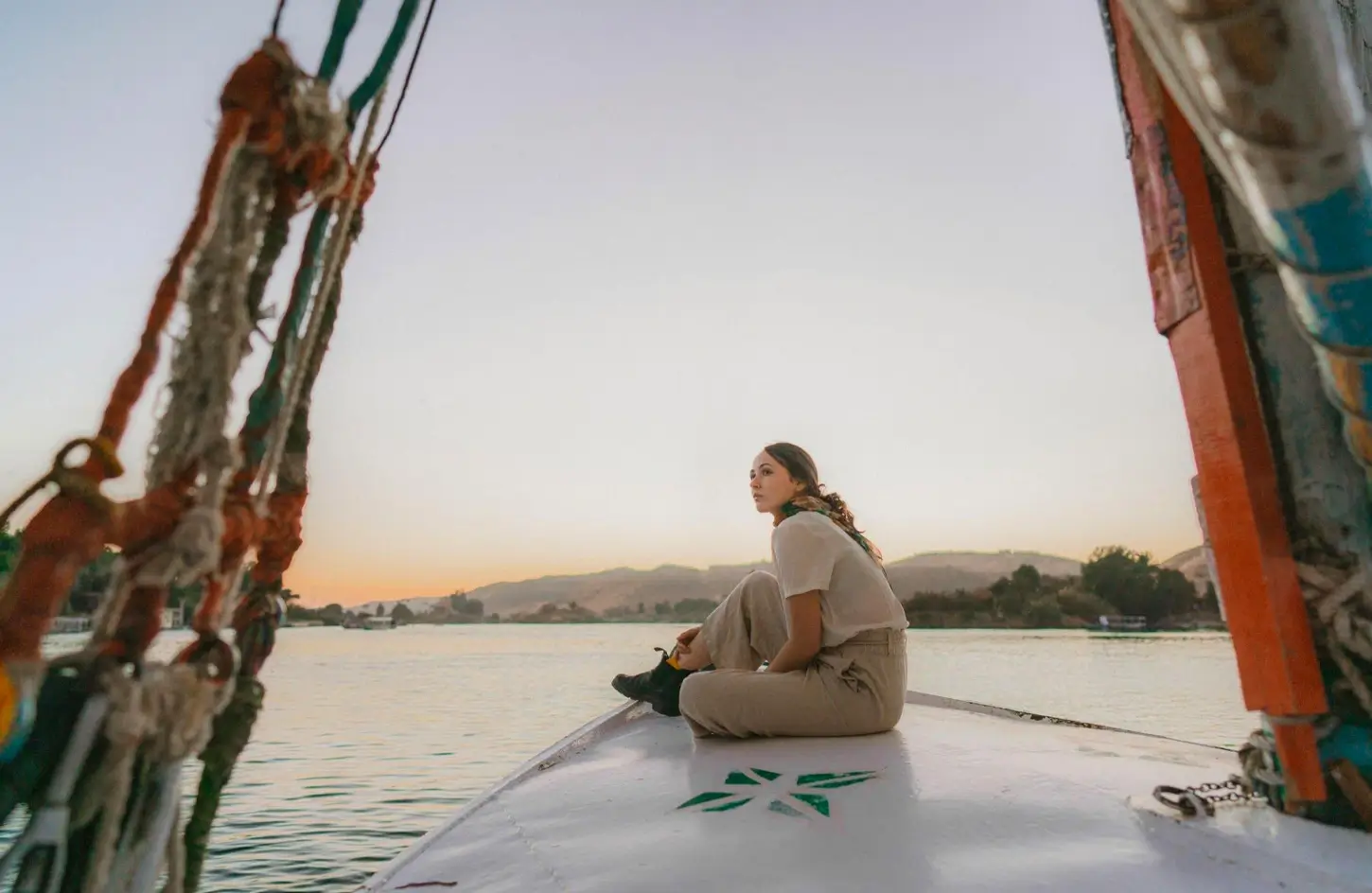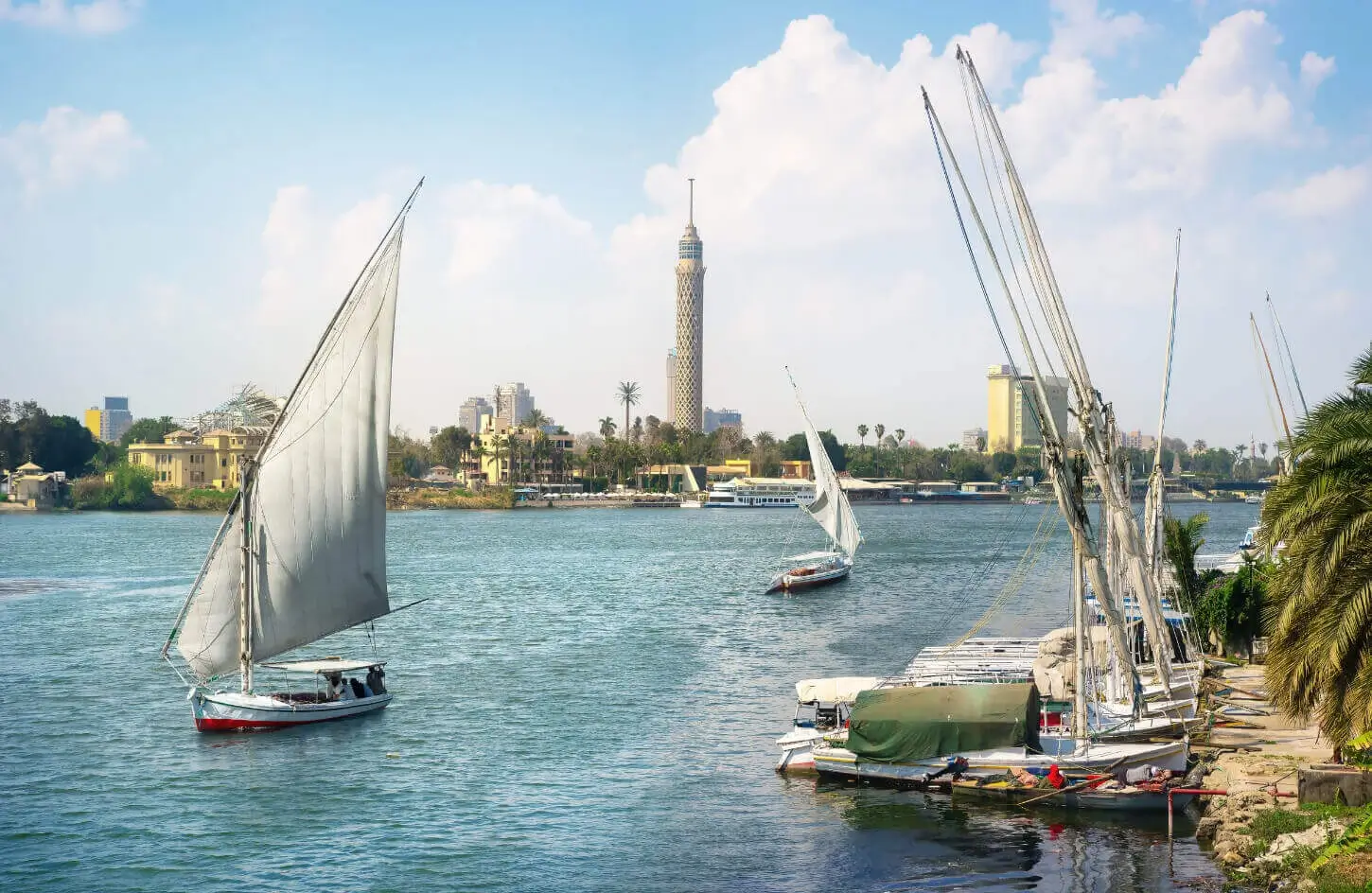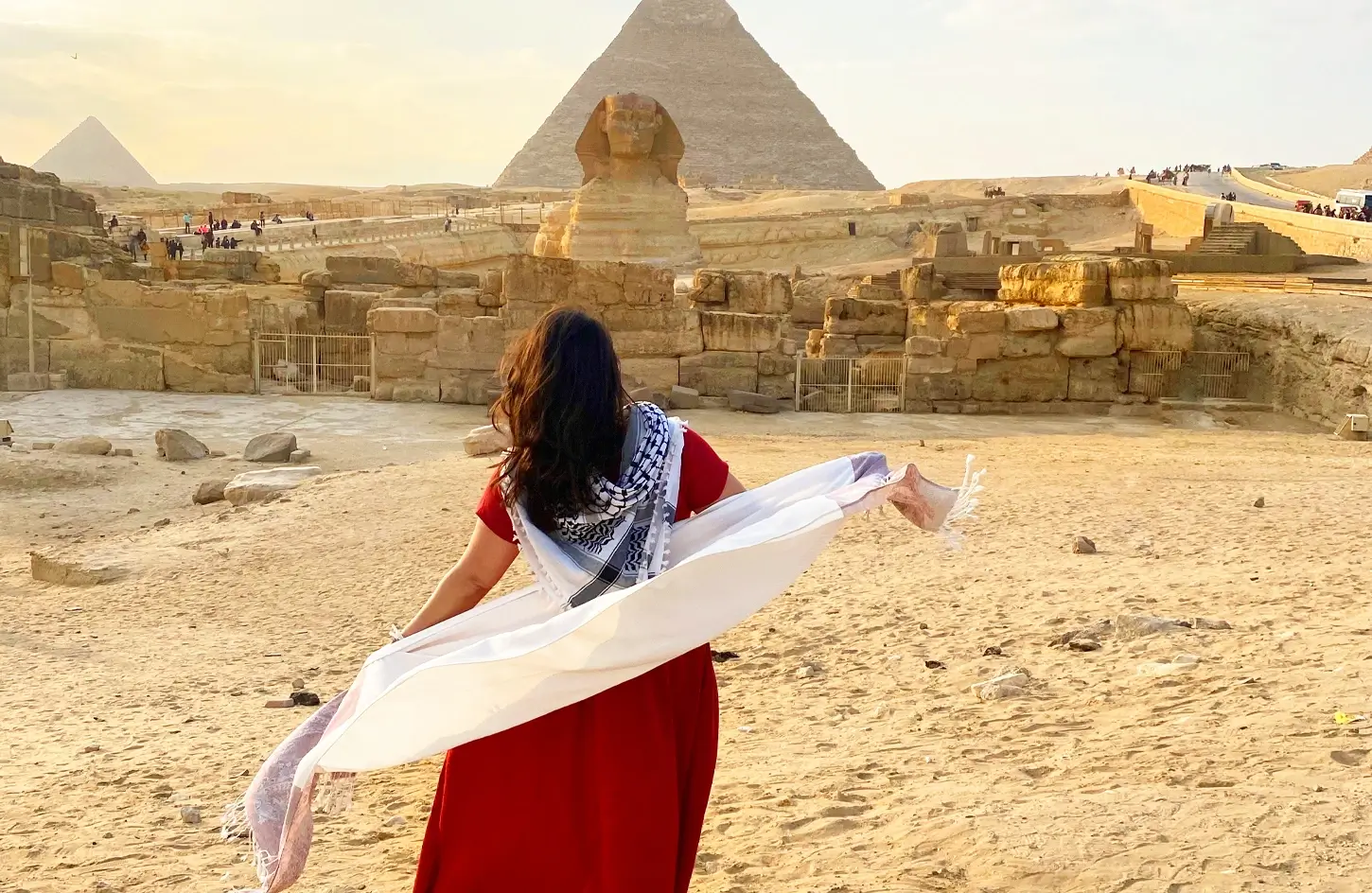
Pack lightweight, breathable clothing in light colors for hot Nile Valley days, at least one warm layer for cool mornings and air-conditioned cabins, modest cover-ups (shoulders and knees) for temple visits, comfortable closed-toe shoes for uneven ancient sites, and one smart-casual outfit for the captain's dinner. A sun hat, high-SPF sunscreen, and a reusable water bottle round out the essentials that make the biggest practical difference onboard.
Understanding the Nile Valley Climate
Luxor and Aswan sit in a desert climate, which means big temperature swings and very little rain — you're extremely unlikely to need a rain jacket regardless of when you sail. What changes by season is the daytime heat and how cold it gets after sunset.
- Winter (November–February): Pleasant, sunny days in the 65–75°F (18–24°C) range, but mornings and evenings can drop into the 50s°F (10–14°C), especially on the open sun deck or during an early-morning temple visit before the sun is fully up.
- Shoulder months (March–April, October): Warm to hot days, mild nights. Very comfortable for sightseeing, though afternoons can already feel like summer.
- Summer (May–September): Daytime highs regularly climb past 100°F (38°C) in Luxor and Aswan, sometimes well beyond it. Evenings stay warm. This is when sun protection and hydration matter most, not layering.
Whatever month you travel, the river itself creates a cooling breeze on deck, and cabins are air-conditioned — so a light layer (cardigan, wrap, or long-sleeve shirt) earns its space in your bag even in summer, mainly for the cabin and dining room.
Dress Code On and Off the Boat
Nile cruise ships are relaxed and international in atmosphere — there's no rigid uniform code the way there might be on a large ocean liner. But a few situations call for specific choices:
Onboard, day to day
Casual, comfortable clothing is standard for breakfast, lunch, and lounging by the pool: shorts, t-shirts, sundresses, swimwear on the sun deck. Some ships ask guests to change out of swimwear for the indoor dining room.
Visiting temples and tombs
Egypt is a Muslim-majority country and, while there's no legally enforced dress code for tourists at archaeological sites, dressing modestly is respectful and genuinely more comfortable — it also helps you avoid the more persistent souvenir sellers and hassle at site entrances. Aim for shoulders and knees covered for both women and men. Lightweight linen trousers, midi skirts, and short-sleeve or three-quarter-sleeve tops work well in the heat while staying modest. A lightweight scarf is useful for women who want to cover up quickly, and essential if you plan to step into a working mosque (such as during a Cairo stopover), where headscarves are typically required for women, and everyone removes shoes.
Captain's dinner/gala night
Most Nile cruises hold one "gala" or "galabeya party" evening and sometimes a separate captain's welcome dinner. Dress is smart-casual rather than formal — a sundress or collared shirt and trousers is plenty. If there's a galabeya (traditional Egyptian robe) party, no need to buy one in advance; they're sold cheaply in Luxor and Aswan markets, or some cruises provide them.
The Complete Nile Cruise Packing List
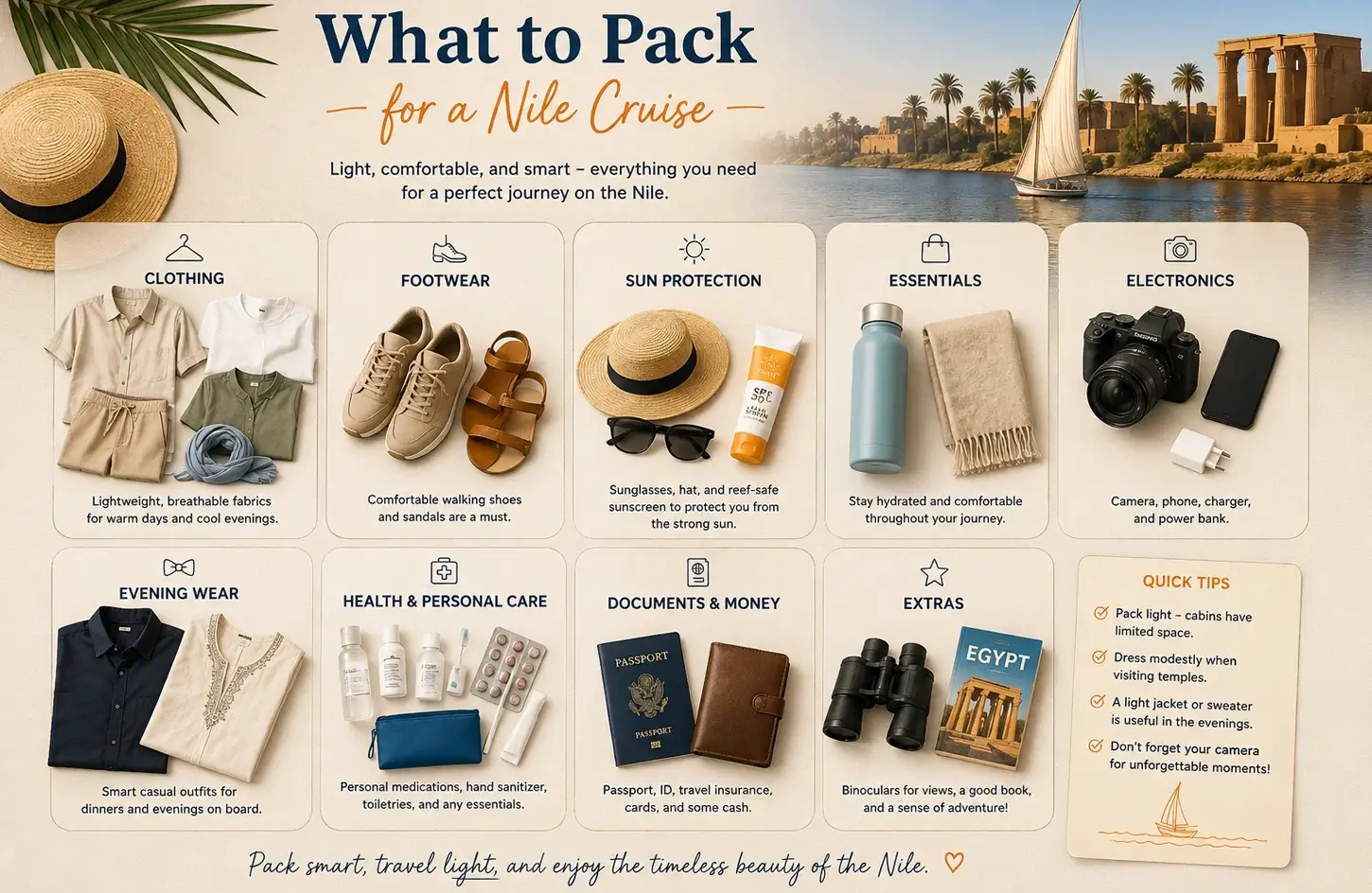
Clothing
- Lightweight, breathable tops (cotton or linen) — pack more of these than anything else
- Loose trousers, linen pants, or long skirts for temple visits
- Shorts and t-shirts for onboard downtime
- One long-sleeve shirt or light jacket for cool mornings/evenings and heavily air-conditioned cabins
- Swimwear for the sun deck pool
- A lightweight scarf or sarong (sun protection, modesty cover-up, mosque visits)
- One smart-casual outfit for the gala dinner
- Sleepwear
Footwear
- Comfortable, closed-toe walking shoes with grip — temple floors and Valley of the Kings paths are uneven, dusty, and sometimes have loose stone
- Sandals or flip-flops for the pool deck and cabin
- Optional: a second pair of walking shoes if traveling in the shoulder season when feet may get wet from boat gangway crossings
Sun and health protection
- High-SPF sunscreen (30+) — reapply more often than you think you need to
- Sunglasses and a wide-brimmed hat or cap
- Lip balm with SPF
- Basic travel medical kit: rehydration salts, anti-diarrheal medication, pain relievers, any personal prescriptions in original packaging
- Hand sanitizer and a small pack of tissues (public restrooms at sites don't always stock paper)
- Insect repellent, especially for evenings near the river
Electronics and documents
- Universal travel adapter (Egypt uses the European-style two-round-pin plug, 220V)
- Phone charger, portable power bank for long excursion days
- Passport (with the required validity — see our visa guide below) plus printed or digital copies stored separately
- Visa confirmation/printout if you applied online
- Cruise and flight booking confirmations
- A small amount of cash in small-denomination US dollars or euros, useful for tipping (see our full tipping guide) and small purchases
Nice-to-haves
- A reusable water bottle — most cruises provide safe drinking water onboard, and refilling cuts down on plastic bottle waste
- A dry bag or ziplock bags to protect electronics from dust during felucca rides or desert excursions
- A small daypack for shore excursions
- Binoculars, if you enjoy birdwatching along the riverbanks
- A notebook or e-reader for the long, scenic sailing stretches between Luxor and Aswan

What Not to Bother Packing
- Formal wear — even gala night is smart-casual, not black-tie.
- Heavy jackets or sweaters — a light layer covers the coolest winter evenings; you won't need anything heavier even in January.
- An umbrella — rain is rare enough in Upper Egypt that it's not worth the suitcase space; a hat handles the sun instead.
- Iron or steamer — most cruise cabins don't have outlets rated for them, and laundry service (see below) handles wrinkles for you.
- A week's worth of single-use toiletries — cabins are compact; travel-size bottles you can refill are more practical than committing a whole shelf to toiletries.
Packing by Season at a Glance
| Season | Typical daytime feel | Priority items |
|---|---|---|
| Winter (Nov–Feb) | Pleasant, cool mornings/evenings | Light layer, long-sleeve options, comfortable walking shoes |
| Shoulder (Mar–Apr, Oct) | Warm days, mild nights | Breathable fabrics, sun hat, light layer for evenings |
| Summer (May–Sep) | Very hot | Maximum sun protection, moisture-wicking fabrics, electrolyte tablets |
A Note on Luggage and Laundry
Nile cruise cabins are comfortable but not large, and closet space is limited compared to a hotel room — a soft-sided suitcase or duffel that collapses for storage under the bed is more practical than a large hard-shell case. Most cruise ships offer a laundry service (sometimes complimentary, sometimes for a fee depending on the operator and cruise package), which means you can genuinely pack lighter than you might for a land-based multi-city trip. If laundry service matters to you, it's worth confirming what's included when you book.
If You're Also Visiting Cairo or the Red Sea
Many Nile cruise itineraries are bookended by a night or two in Cairo, or paired with a Red Sea resort stay. If that's your plan, a couple of small adjustments help: Cairo's Egyptian Museum and the Pyramids of Giza call for the same modest, comfortable approach as the temples further south, plus sturdy shoes for walking on sand and uneven stone at the Giza plateau. If your itinerary includes the Great Mosque of Muhammad Ali or another working mosque, pack a scarf and a top with sleeves even if you didn't think you'd need one on the boat itself. For a Red Sea add-on, swimwear and reef-safe sunscreen earn their place, since beach and snorkeling days call for different priorities than temple days.
Carry-On Essentials for Arrival Day
Whatever you check, keep a few things in your carry-on rather than checked luggage: your passport and visa approval, any prescription medication, a change of clothes in case checked bags are delayed, sunscreen and a hat for the moment you step off the plane into Egyptian heat, and your cruise booking confirmation. Flights connecting into Luxor or Aswan sometimes involve tight transfer windows to reach the ship on embarkation day, so having what you need immediately accessible removes one source of stress before the trip has even properly started.
Once your bags are packed, the rest is just deciding which Nile cruise itinerary fits your dates — the packing list above works whether you're sailing a short Luxor–Aswan run or a longer round trip.