Yes, Egypt is generally considered safe for tourists in 2026, including for Nile cruise travelers. As of mid-2026, both the US State Department and the UK Foreign, Commonwealth & Development Office (FCDO) treat Egypt's mainstream tourist destinations — Cairo, Giza, Luxor, Aswan, and the Red Sea resort towns — as safe for travel, reserving their more serious cautions for specific border and Sinai regions that fall well outside any standard Nile cruise itinerary. That said, advisories are updated as situations change, so it's worth checking the current guidance again shortly before you fly, not just when you book.
What the Official Travel Advisories Actually Say
It's easy to find alarming headlines about the Middle East and assume they apply evenly across the whole region. They don't. Here's what the two most-cited government sources say specifically about Egypt, as of our research in mid-2026.
US State Department
The US rates Egypt at Level 2: Exercise Increased Caution — the same tier assigned to countries like France, Italy, Belgium, and the United Kingdom itself, so it's not a designation reserved for high-risk destinations. The Level 2 rating cites general concerns about terrorism and crime, common to Level 2 ratings anywhere. Within that overall Level 2 rating, two specific zones carry a more serious Level 4: Do Not Travel designation: the Northern and Middle Sinai Peninsula, and parts of the Western Desert along the border with Libya. Neither of those areas features in a Nile cruise itinerary. For the current, official version of this advisory, check travel.state.gov directly.
UK Foreign, Commonwealth & Development Office (FCDO)
The FCDO does not advise against travel to Egypt's core tourist destinations — Cairo, Alexandria, Luxor, Aswan, and the established Red Sea resorts of Sharm El Sheikh, Hurghada, Makadi Bay, and Sahl Hasheesh are all treated as places British travelers can visit normally, with standard precautions. The FCDO does advise against all travel within 20km of the Egypt–Libya border (except the town of El Salloum, where it advises against all but essential travel), against all travel to the North Sinai Governorate, and against all but essential travel to the northern part of South Sinai beyond the St Catherine–Nuweiba road (excluding the coastal resort strip). The FCDO updated its guidance in early 2026 to flag a "heightened risk of regional tension" given the wider situation in the Middle East, while still not extending any avoid-travel guidance to the Nile Valley or Red Sea resort areas. For the current wording, check gov.uk/foreign-travel-advice/egypt.
Why the Sinai and Libya Border Cautions Don't Touch a Nile Cruise
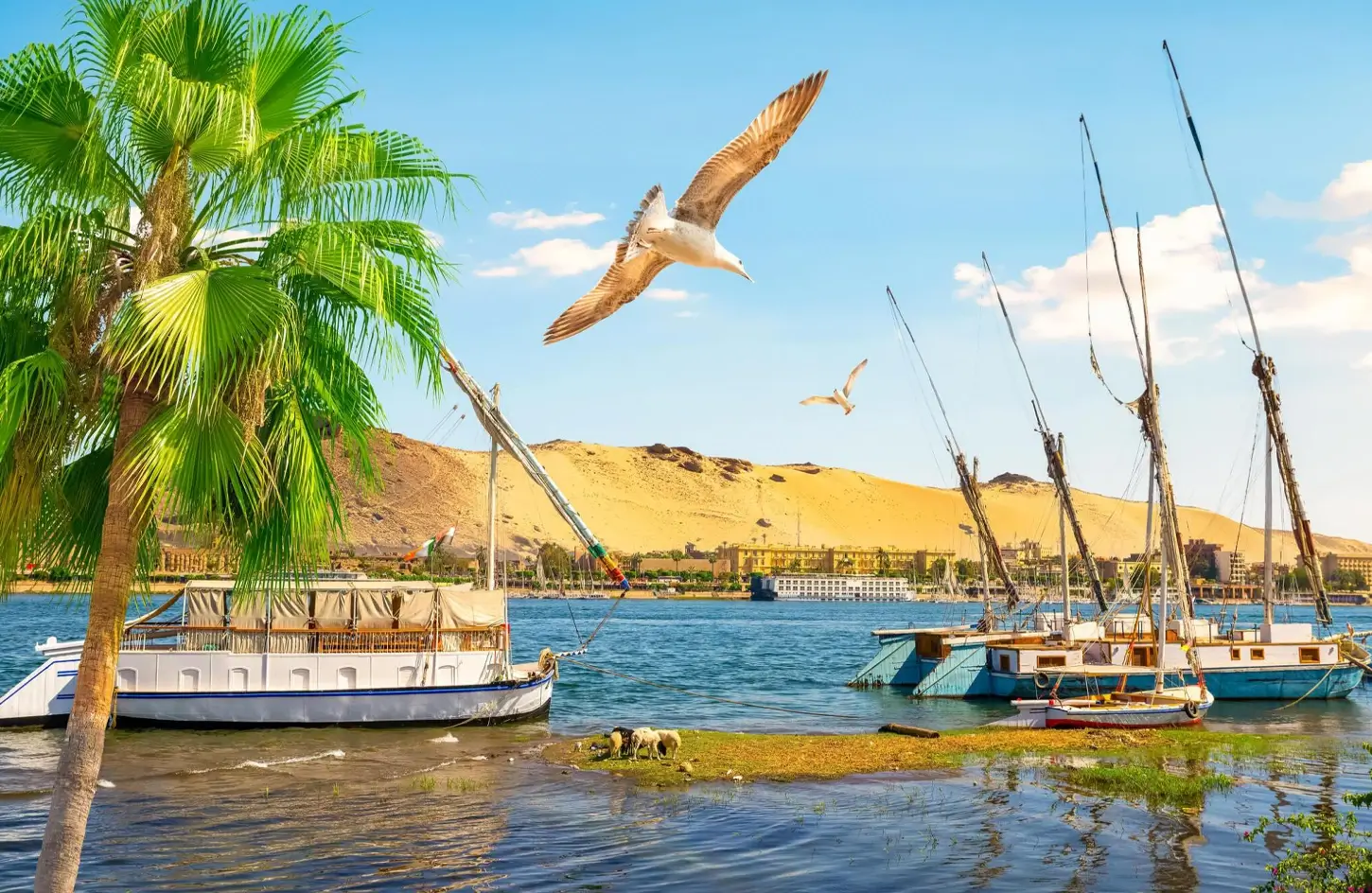
It helps to look at a map here. A standard Nile cruise runs between Luxor and Aswan — roughly 130 miles (210 km) of river in Upper Egypt — often paired with time in Cairo and Giza beforehand or afterward. The Sinai Peninsula and the Libyan border region are geographically distant from that route, on the opposite side of the country. Travelers who also add a few days at a Red Sea resort like Hurghada are still within areas both advisories treat as fine for tourism; it's specifically the northern and interior parts of Sinai, away from the established coastal resorts, and the strip along the Libyan border, that carry the more serious warnings.
Is the Nile Cruise Route Itself Safe?
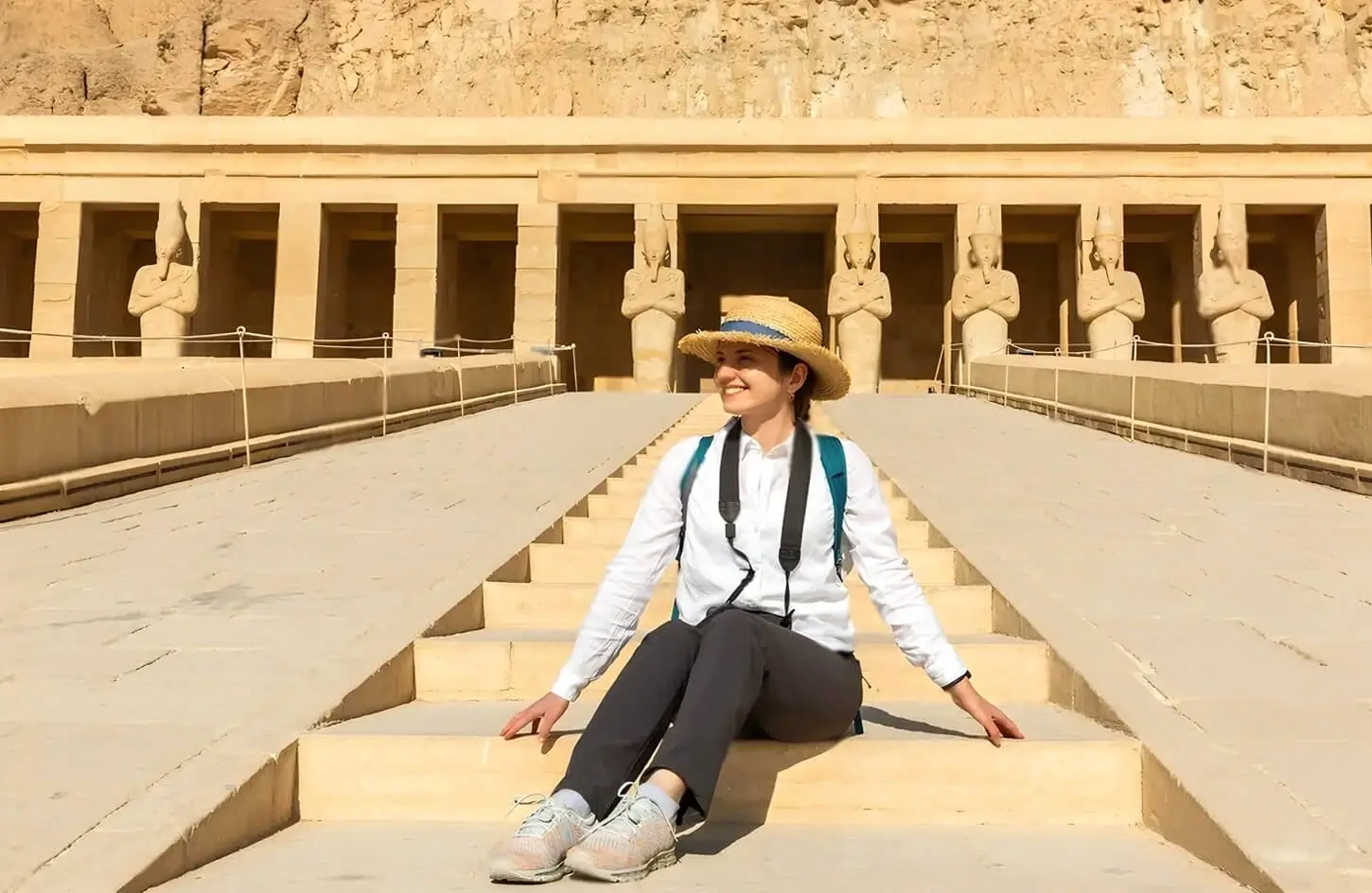
The Luxor–Aswan corridor is one of the most tightly monitored tourist routes in the country. Tourist and Antiquities Police maintain a visible presence at archaeological sites and along the riverbanks, cruise ships typically carry dedicated onboard security, and vessels pass through the Esna and Naga Hammadi locks under routine checks. Hundreds of cruise ships operate on this stretch of the Nile every season without incident, and it has been years since any security incident affected cruise tourists on this route. That doesn't mean zero risk exists anywhere in the world — it means this specific route has an established, long-running track record of safe operation, and it's the reason neither the US nor UK advisory singles it out for caution.
What Tourists Actually Encounter Day to Day
The realistic, day-to-day safety picture for most visitors has little to do with terrorism-level concerns and much more to do with ordinary travel friction:
- Persistent vendors and unofficial guides at sites like the Pyramids, Karnak, and the Valley of the Kings — a firm, polite "no thank you" and continuing to walk works better than lengthy explanations.
- Overcharging and haggling in markets, for taxis, and with unofficial photo-with-a-camel offers — agree on a price before accepting any service or photo.
- Petty theft in crowded markets or transport hubs is a low but non-zero risk, the same as in any major tourist destination — keep valuables in a cruise cabin safe rather than carrying everything on shore excursions.
- Violent crime against tourists is rare in Luxor, Aswan, and Cairo's tourist areas, and both advisories reflect this in their ratings of these destinations.
Practical Safety Tips for Nile Cruise Travelers
- Book with an established, licensed tour operator and cruise line rather than an unverified last-minute deal — reputable operators handle site security, timing around crowds, and logistics that matter more to your actual safety than most people expect.
- Stick with your group and guide during shore excursions rather than wandering off on your own in unfamiliar areas, especially after dark.
- Use the cabin safe for your passport, spare cash, and valuables when you're off the ship.
- Dress modestly, particularly at religious sites and in markets — it reduces unwanted attention and is a sign of respect that's usually reciprocated with friendlier treatment.
- Use official taxis or transport arranged through your cruise or hotel rather than hailing unmarked vehicles, especially at night.
- Carry a printed or photographed copy of your passport and visa when out on excursions, rather than the original, and keep the real document secured onboard.
- Buy travel insurance that covers medical evacuation — a sensible baseline for any international trip, Egypt included.
Health and Water Safety Onboard
Most Nile cruise ships supply filtered or bottled water for drinking, and reputable cruises take food and water safety seriously since repeat business depends on it — but "traveler's stomach" from a change in diet, water, or simply a long trip is still the most common
minor health issue visitors report, not anything more serious. Stick to bottled or ship-provided water even for brushing teeth if you're being cautious, avoid ice from unknown sources when on shore, and pack basic anti-diarrheal medication and rehydration salts just in case, as mentioned in our Nile cruise packing guide.
A Word on Regional Tensions
Both advisories referenced broader regional tension in the Middle East when they were last updated in 2026, and it's reasonable for that to give travelers pause. What's worth keeping in perspective is that neither government has translated that broader concern into an avoid-travel rating for Egypt's tourist areas or the Nile Valley specifically — the specific no-go zones remain the same border and Sinai areas mentioned above, not the cruise corridor. Regional situations can shift, so the responsible approach is to check the advisory again in the days before you fly rather than relying on guidance from months earlier, including this article.
Before You Go
- Check the current advisory directly on travel.state.gov (US) or gov.uk/foreign-travel-advice/egypt (UK) close to your departure date.
- Register your trip with your home country's traveler program if one exists (for example, the US State Department's STEP program) so your embassy can reach you in an emergency.
- Confirm your travel insurance policy covers Egypt and includes medical evacuation.
- Keep your cruise operator's and embassy's contact details saved on your phone and written down separately.
With the safety picture in perspective, the next step is choosing your route — see our current Nile cruises for itineraries between Luxor and Aswan.