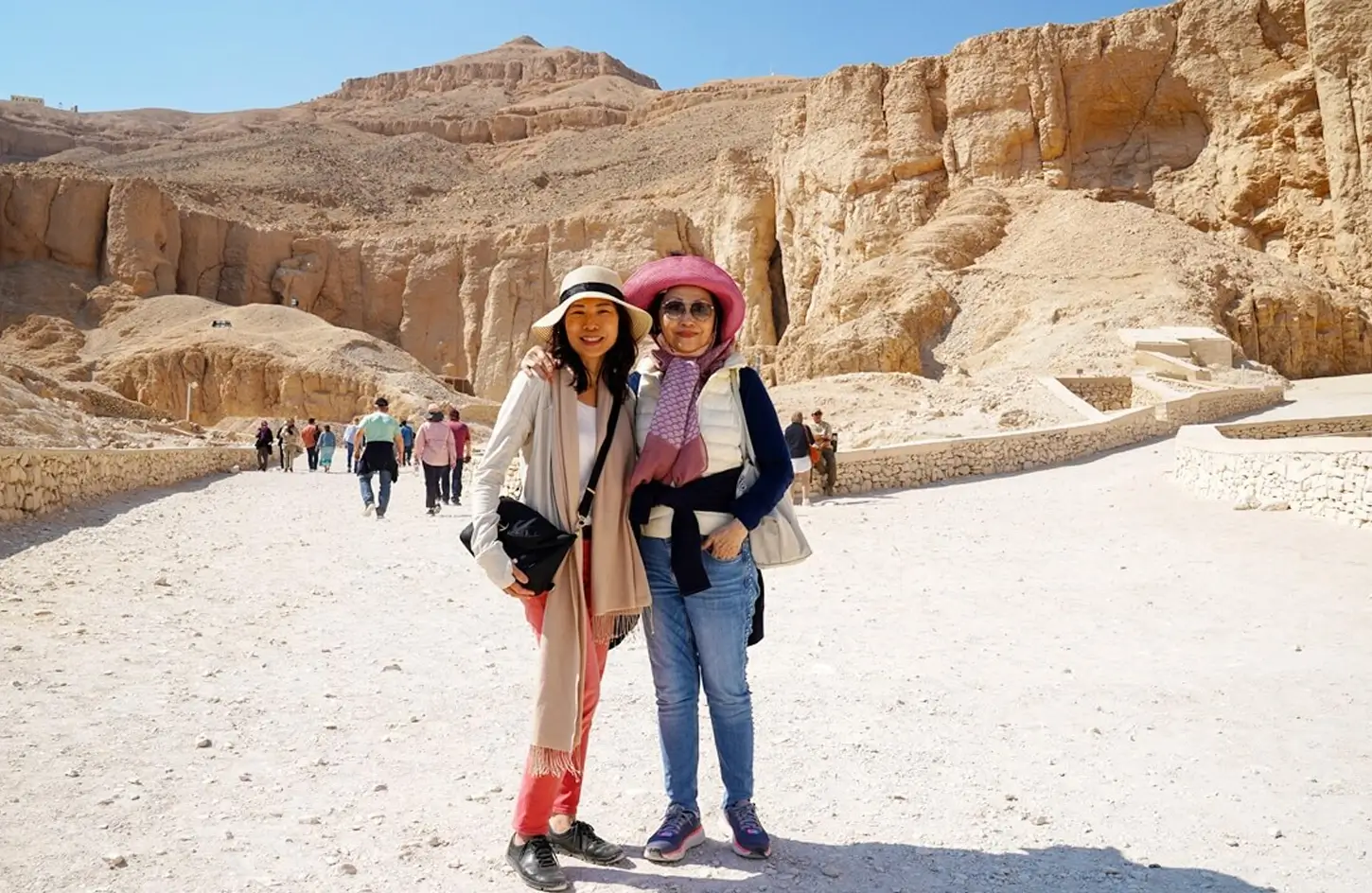
The Valley of the Kings is the burial ground where Egypt's New Kingdom pharaohs — including Tutankhamun, Ramesses II's sons, and Seti I — were interred in tombs cut directly into the desert cliffs on Luxor's West Bank. A standard admission ticket includes entry to three tombs chosen from a rotating group of open sites; the most famous tombs, including Tutankhamun's, require a separate add-on ticket. Expect a morning of walking on uneven ground, descending into narrow painted corridors, and comparing at least three very different royal burial chambers.
Why This Site Exists Here
By the New Kingdom period, Egypt's pharaohs had abandoned the pyramid as a burial marker — too conspicuous, too easy to rob. Instead they carved their tombs deep into a hidden valley behind the cliffs of Deir el-Bahari, accessible through a single narrow entrance that was easier to guard. More than sixty tombs and chambers have been found in the valley so far, ranging from modest single-chamber cuts to sprawling multi-room tombs decorated floor to ceiling with scenes from the Book of the Dead, the Book of Gates, and other funerary texts meant to guide the king through the underworld.
A Site With a Long History of Discovery
Serious excavation of the valley stretches back well over a century, long before Howard Carter's name became attached to it. Early explorers and collectors documented and cleared tombs throughout the 1800s, and by the early twentieth century most archaeologists assumed the valley had given up its major finds. Carter's discovery of Tutankhamun's largely intact tomb in 1922 — after years of funded searching on behalf of Lord Carnarvon — proved that assumption wrong and remains the reason the valley is a household name today. Excavation hasn't fully stopped since: new chambers and side passages are still occasionally found or re-examined, and the valley as a whole is part of the wider UNESCO World Heritage listing for ancient Thebes, alongside Karnak, Luxor Temple, and the rest of the West Bank necropolis.
Getting In: The Visitor Center and Tram
Tickets are bought at a visitor center some distance from the tombs themselves, not directly at the tombs. From there, a short shuttle tram (a small extra fee, paid on the spot) covers the remaining stretch into the valley proper, since walking the full distance in the heat isn't practical for most visitors. Inside the valley, a network of gravel paths connects the open tomb entrances, each marked with its official "KV" number and name. Guides are typically not permitted to give extended lectures inside the tombs themselves — space is tight, and conservation rules limit how long groups linger — so most guides will brief you thoroughly outside each entrance and let you explore the interior at your own pace, which is worth knowing so you don't expect a running commentary once you're inside.
How the Ticket System Actually Works
This trips up a lot of first-time visitors, so it's worth understanding before you go:
- The standard entry ticket covers three tombs, chosen from a group of open tombs that rotates periodically for conservation reasons (tombs are given rest periods to limit humidity damage from visitor breath and body heat).
- Premium tombs — Tutankhamun's (KV62), Seti I's (KV17), and Ramesses V and VI's shared tomb (KV9) among them — require a separate ticket purchased in addition to the standard entry.
- You cannot buy a ticket to only the premium tombs; the standard entry is always required first.
- Ticket prices and the specific tombs on rotation change periodically, so confirm current details with your guide or cruise operator rather than relying on older trip reports.
If you only have the standard ticket, you'll typically be routed toward whichever three tombs are open and least crowded that day — often tombs of Ramesses III, IV, VII, IX, or Merenptah. These are still genuinely impressive; they simply lack the global name recognition of Tutankhamun's tomb.
Is Tutankhamun's Tomb Worth the Extra Ticket?
Set expectations here: Tutankhamun's tomb is small and its treasures are long gone (they're displayed in Cairo and at the Grand Egyptian Museum), so as a physical space it's modest compared to the larger, more elaborately painted tombs of Seti I or Ramesses VI. What you're really paying for is standing in the exact chamber where Howard Carter made the most famous archaeological discovery of the twentieth century in 1922, and — in most cases — seeing Tutankhamun's mummy itself, which remains in the tomb in a climate-controlled case. Whether that's worth the add-on fee depends on how much that history matters to you; for many travelers it's the single most memorable few minutes of the whole cruise.
What You'll Actually See Inside
- Steeply descending corridors, sometimes over 100 meters long, leading down to the burial chamber — some tombs are a short walk in, others involve real descent.
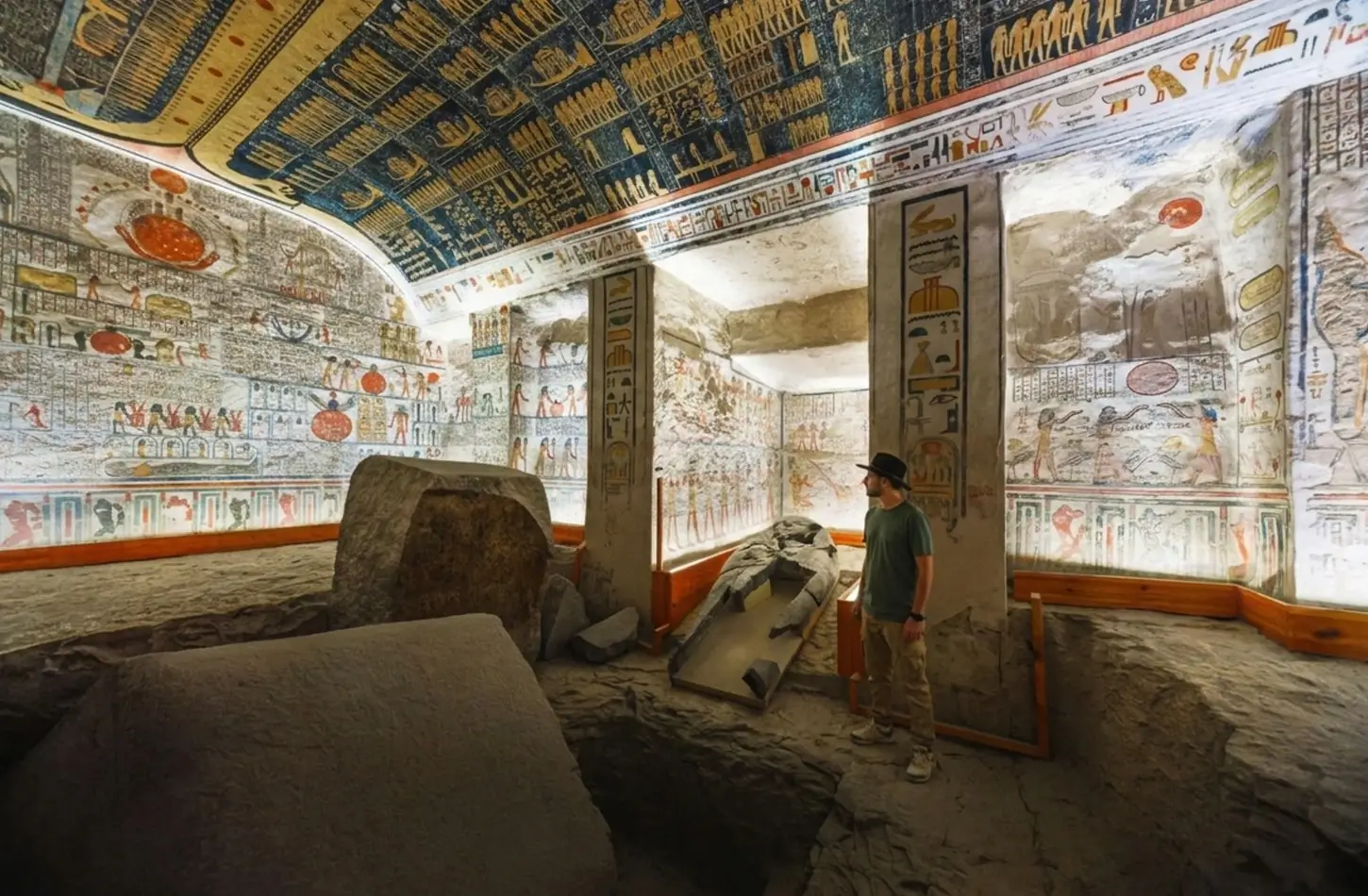
- Painted or carved walls covered in hieroglyphic funerary texts and scenes of the pharaoh with various gods, still showing vivid color in the best-preserved tombs.
- Astronomical ceilings in several tombs, painted with star fields or figures representing the sky goddess Nut.
- Sarcophagi, usually the outer stone sarcophagus only — the nested coffins and grave goods were removed to museums long ago (Tutankhamun's tomb being the notable partial exception).
Photography Rules
Photography policy in the Valley of the Kings has changed more than once over the years, and it's still worth confirming on the day, but as of recent visits the general pattern is:
- Photos on a phone are generally permitted inside most open tombs.
- Tutankhamun's tomb is typically an exception, with photography restricted or not allowed.
- Professional cameras and tripods usually require a separate photography permit purchased at the ticket office, and are often restricted or banned inside the more fragile, brightly painted tombs.
- Flash photography is never allowed anywhere in the valley — it damages the pigments on ancient painted plaster, and enforcement is strict.
Because these rules shift, treat any specific claim (including this one) as a starting point rather than gospel, and take your cue from the site guards and your guide on arrival.
How to Prepare
- Go early if you can. The valley has no shade and sits in a natural heat trap between cliff walls; mornings are cooler and less crowded.
- Wear closed shoes with grip. Descending ramps into tombs can be steep, uneven, and occasionally slippery from foot traffic.
- Bring water and a hat. There's very limited shade between the visitor center and the tombs, and it's a longer walk than first-timers expect.
- Leave large bags behind if possible. Bag storage and security screening are standard at the entrance, and bulky bags slow you down in narrow tomb corridors.
- Decide on your three tombs before you go in if you have any specific interest (a particular pharaoh, a famous ceiling), since staff can point you toward whichever tombs are currently open once you're inside the gate.
- Budget more time than you think. Even without the crowds of Karnak, moving between tombs, queuing at entrances, and taking in each chamber slowly adds up to a solid two to three hours.
Where It Fits in a Nile Cruise
The Valley of the Kings is a fixture of every Luxor-based cruise itinerary, almost always paired with the Temple of Hatshepsut and the Colossi of Memnon on the same West Bank morning. It's one of the reasons the West Bank day tends to be the busiest sightseeing morning of the entire cruise — plan for an early wake-up call and you'll be glad you did once you're standing in front of the first tomb entrance in cooler, quieter conditions.
If you're still comparing cruise options, every itinerary on Egypt Cruise Trips' Nile cruise pages includes a West Bank excursion with entry to the Valley of the Kings, whether you go with the standard, deluxe, or luxury tier.