Philae Temple and the Aswan High Dam are typically visited back-to-back as a single half-day excursion in Aswan, and the pairing makes historical sense: the High Dam is what created Lake Nasser and threatened to permanently submerge Philae, while the temple itself only survives today because of a major international rescue effort that moved it, stone by stone, to higher ground. Expect a quick stop at the dam's viewpoint, a short motorboat ride across open water, and an hour or so exploring one of Egypt's most elegantly preserved temple complexes.
Aswan High Dam First
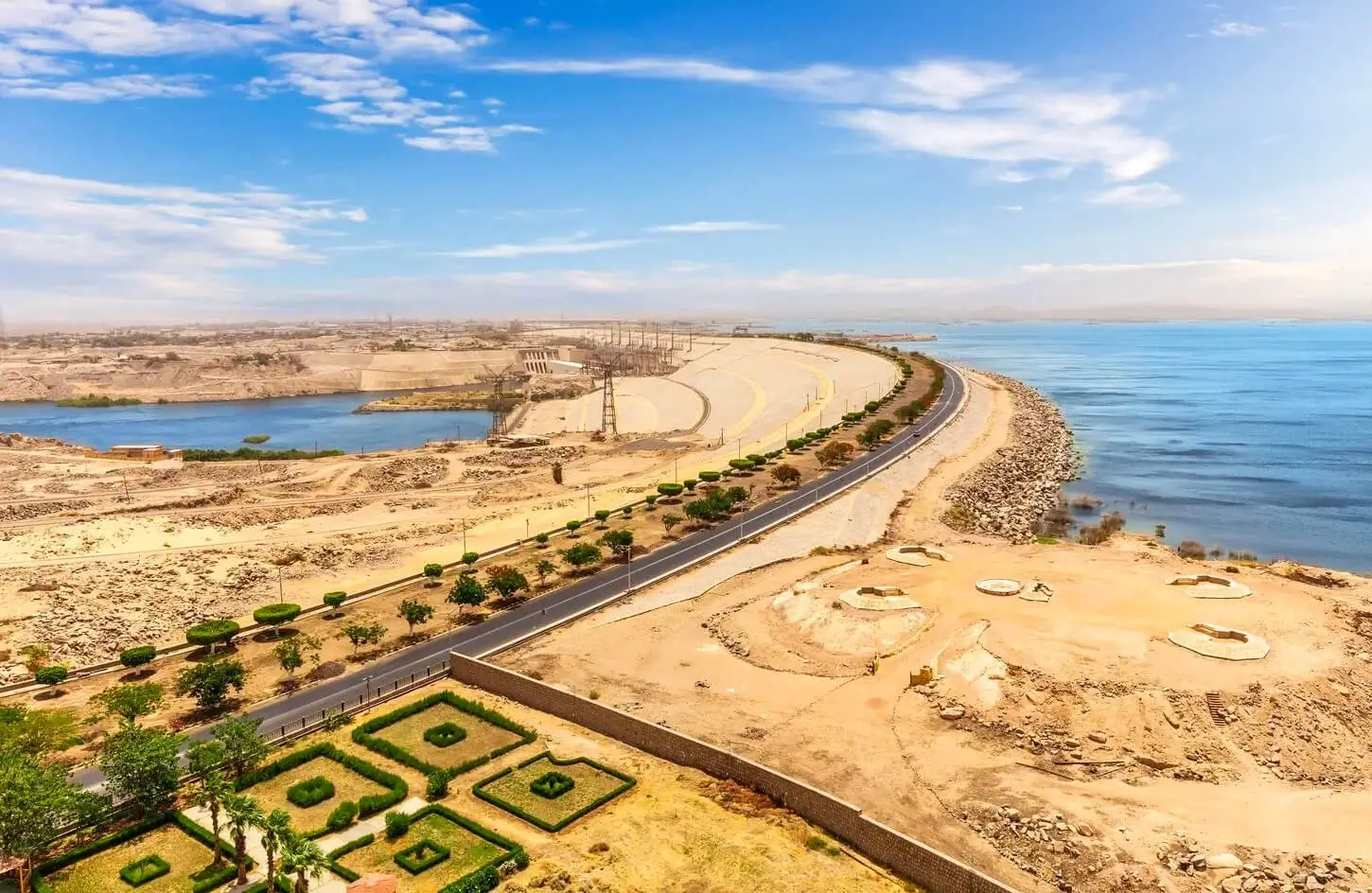
Most itineraries visit the dam before the temple, partly for logistics and partly because it sets up the story you're about to see the ending of at Philae. The High Dam is a functioning piece of Egyptian infrastructure — not a museum piece — and it's treated accordingly:
- It remains a military-sensitive site, so bring a passport or photo ID, expect a security checkpoint, and follow posted instructions about where photography is and isn't allowed.
- Photography of the dam wall and any visible military installations is restricted; casual photos from the designated viewpoint are generally fine, but professional equipment, zoom lenses, drones, and tripods may require permission or be prohibited altogethe.
- At the site there's a small pavilion with information on the dam's construction and scale, and a monument commemorating Soviet-Egyptian cooperation on the project (the dam was built with substantial Soviet engineering and financial support during the 1960s).
- A viewing platform lets you look out over both the dam structure and the vast expanse of Lake Nasser on one side, with the Nile valley continuing on the other.
The visit itself is brief — most groups spend well under an hour here — but it matters for context. Completed in the 1970s, the High Dam ended the Nile's millennia-old cycle of annual flooding, enabling year-round irrigation and hydroelectric power, but at the cost of creating a reservoir that swallowed ancient Nubian land, villages, and monuments across a huge stretch of southern Egypt and northern Sudan. Philae was one of the sites caught directly in that trade-off.
Philae Wasn't the Only Temple Moved
It's easy to assume Philae was a one-off rescue, but the rising waters of Lake Nasser threatened dozens of Nubian monuments, and Philae was only the most visited of several relocations carried out around the same period. Temples at Kalabsha, Amada, and Wadi es-Sebua, among others, were also dismantled and moved to safer ground along the lake's edge, while the two temples of Abu Simbel further south underwent an even larger version of the same rescue. Taken together, the UNESCO Nubia Campaign of the 1960s and 70s is considered one of the largest heritage preservation efforts ever undertaken, and Philae is the most accessible way for a Nile cruise passenger to see the results firsthand.
Getting to Philae Temple
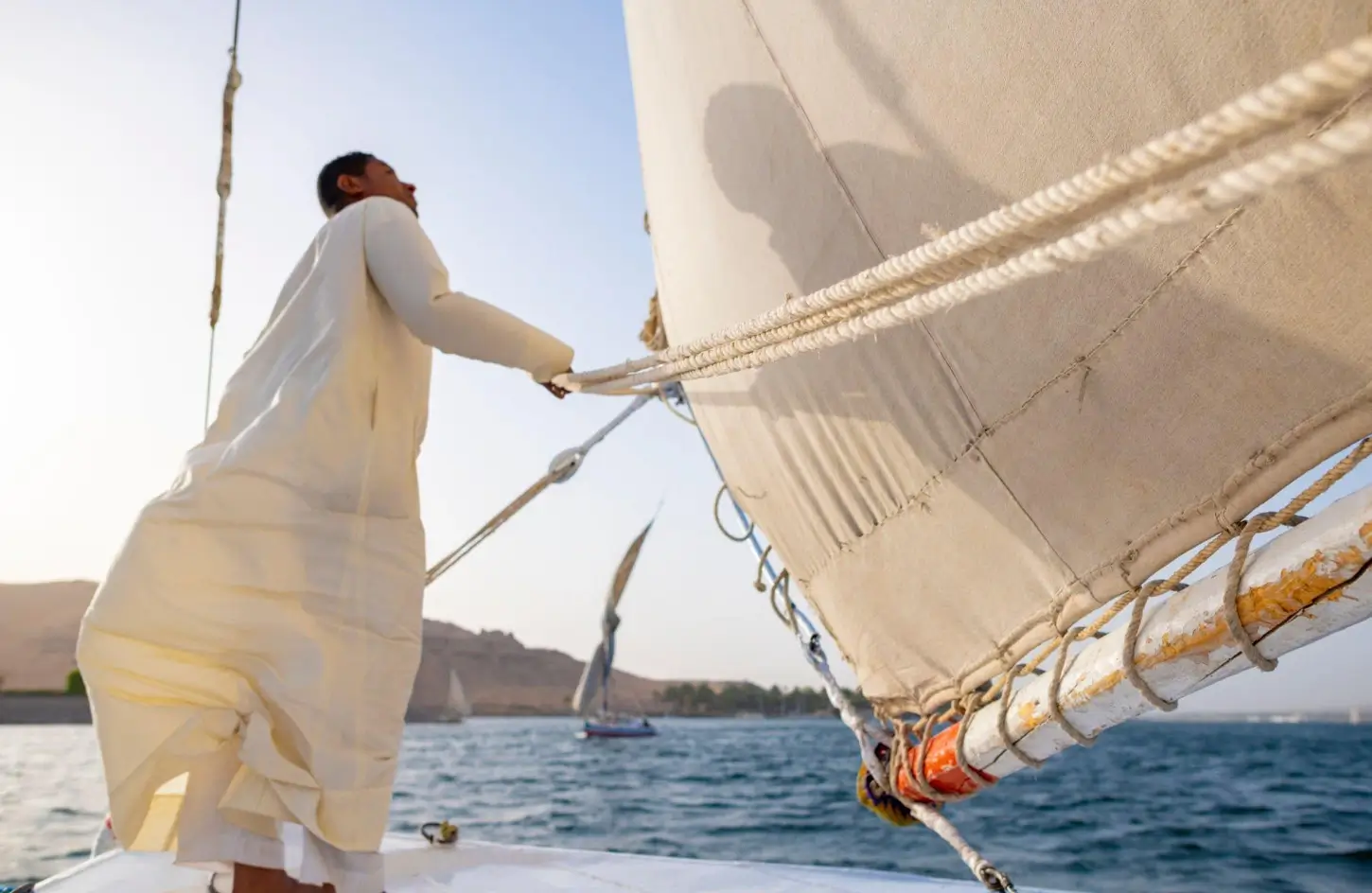
Philae isn't reachable by road. From the dam area (or central Aswan, depending on your itinerary), you're driven to a small marina, where a short motorboat crossing — typically fifteen to twenty minutes — takes you out to Agilkia Island, where the temple now stands. The approach by water is part of the experience: the temple's columns and pylons come into view gradually across the water, much as they would have for ancient visitors arriving by Nile boat.
The Relocation Story
The original Temple of Philae stood on Philae Island itself, a short distance away, and was already partially submerged for part of the year after an earlier, lower Aswan dam was built in the early 20th century. When the much larger Aswan High Dam went up in the 1960s and Lake Nasser began filling behind it, Philae's original site was set to disappear under water permanently. UNESCO coordinated an international rescue operation between 1972 and 1980: engineers built a temporary coffer dam around the original island, drained the water inside it, then dismantled the entire temple complex — more than a thousand numbered stone blocks — and reassembled it on the higher, nearby island of Agilkia, reproducing the original layout and even reshaping Agilkia's terrain to resemble Philae's original topography.
It's one of the more remarkable stories in modern archaeology, and worth having your guide walk you through in some detail while you're standing among the actual relocated stones.
What You'll See at the Temple
- The First Pylon — the grand entrance gateway, decorated with reliefs of pharaohs (including Ptolemaic-era rulers) smiting enemies before the gods, a standard piece of temple facade iconography.
- The Temple of Isis — the main sanctuary, dedicated to the goddess Isis, one of the most widely worshipped deities in the ancient Mediterranean world; her cult here persisted well into the Christian era, making Philae one of the last places in Egypt where the old religion was practiced openly.
- Trajan's Kiosk — an elegant, roofless colonnaded structure near the water's edge, built under Roman rule and among the most photographed structures on the island.
- Coptic crosses carved into some walls — evidence of the temple's later life as a Christian church after the Isis cult was suppressed, a good example of how many of Egypt's ancient sites were repurposed rather than destroyed.
Philae also hosts an evening sound-and-light show, projected across the temple facade and columns, for travelers staying in Aswan long enough to add an evening outing.
The Unfinished Obelisk: A Natural Third Stop
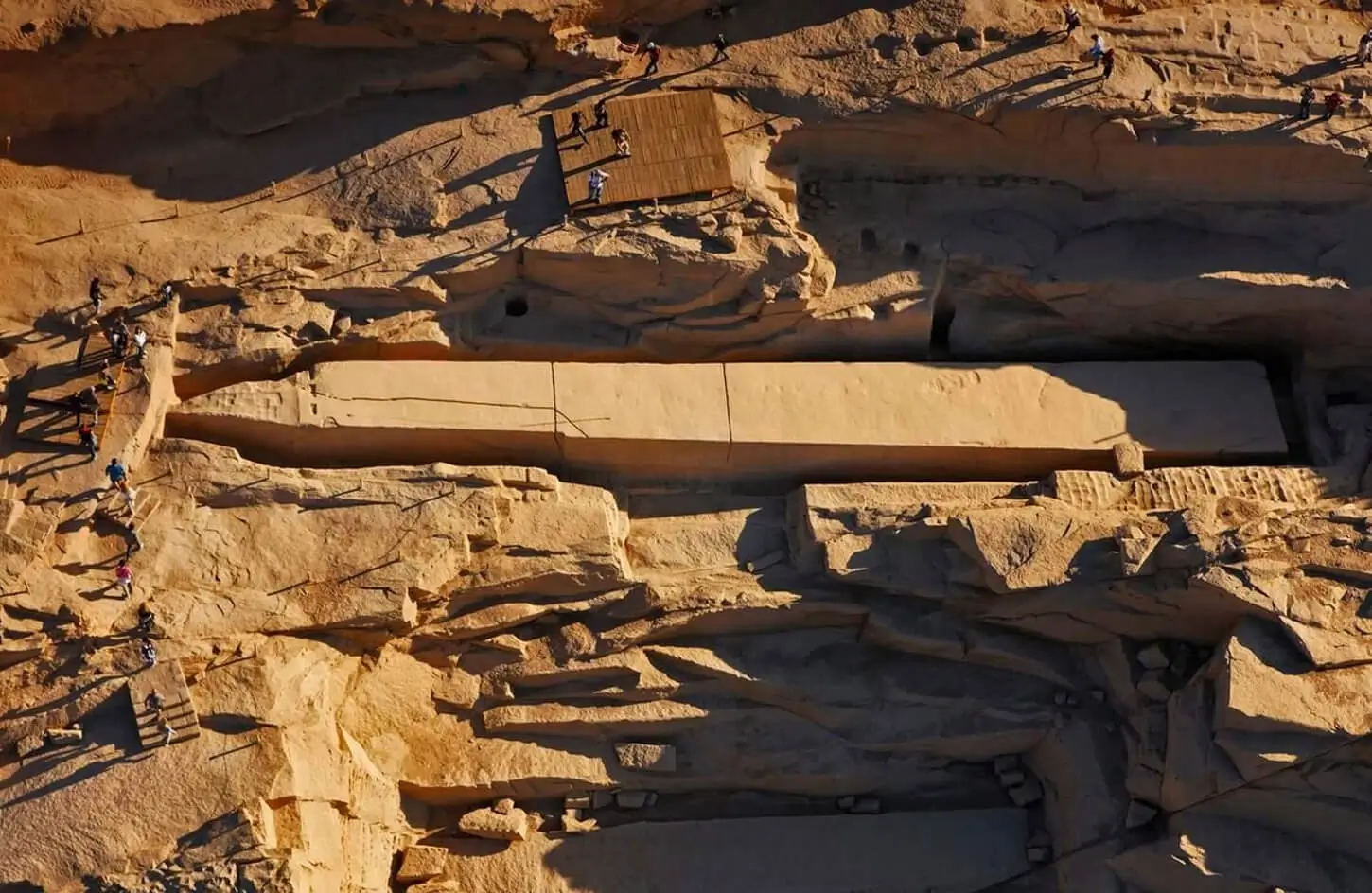
Most Aswan sightseeing mornings tack on a short visit to the Unfinished Obelisk, back in an ancient granite quarry within the city itself. A crack appeared in the stone partway through carving, and the obelisk — which would have been the largest ever raised in Egypt had it been completed — was abandoned in place, still attached to the bedrock on three sides. It's a genuinely useful complement to Philae and the dam: rather than reading about how the Egyptians quarried and transported multi-hundred-ton blocks of stone, you can stand next to an unfinished example and see the tool marks and extraction channels for yourself.
Practical Tips
- Morning visits are generally cooler and give better light for photos across the water on the approach to the island.
- Wear comfortable shoes for the boat dock and the island's uneven ancient stone flooring.
- Bring a passport or ID copy for the High Dam checkpoint, and don't photograph anything beyond the designated viewpoint area.
- Budget roughly half a day total once you include transfers, the dam stop, the boat crossing, and time at the temple itself.
- If your schedule allows an evening in Aswan, ask about the Philae sound-and-light show separately — it's usually ticketed on its own and isn't automatically bundled into the daytime excursion.
- The motorboat crossing can get breezy even on a hot day, so a light layer is worth having for the water portion even if you don't need it on land.
A Half-Day That Explains a Lot About Modern Egypt
What makes this pairing more than just two more stops on a checklist is how directly it connects ancient and modern history. Very few excursions on a Nile cruise let you stand at a functioning piece of twentieth-century infrastructure and, an hour later, stand inside a three-thousand-year-old temple that only exists in its current location because of that same infrastructure. It's a rare case where the "before" and "after" of a major historical trade-off are both physically visitable in the same morning, which is part of why guides tend to spend real time on the story here rather than treating it as a quick photo stop.
Where It Fits on a Nile Cruise
This half-day pairing is one of the most consistent fixtures of any Aswan-based cruise stop, usually scheduled for the morning the ship is docked in Aswan, alongside a stop at the Unfinished Obelisk. Unlike Abu Simbel, it requires no early pre-dawn departure or full extra day — it fits comfortably within a standard cruise day.
Every itinerary listed under Egypt Cruise Trips' Nile cruises includes an Aswan sightseeing stop built around Philae and the High Dam, whether you're sailing on the standard, deluxe, or luxury tier.