Karnak Temple opens at 6:00 am, and arriving at or close to that time is the single best way to experience it — the desert heat hasn't built up yet, the tour bus crowds are still at breakfast, and the low morning sun rakes across the Great Hypostyle Hall's columns in a way that midday's flat overhead light simply can't match. Karnak is enormous — the largest religious complex to survive from the ancient world — and an early, unhurried visit lets you actually absorb it rather than shuffle through with a hundred other people.
What Karnak Actually Is
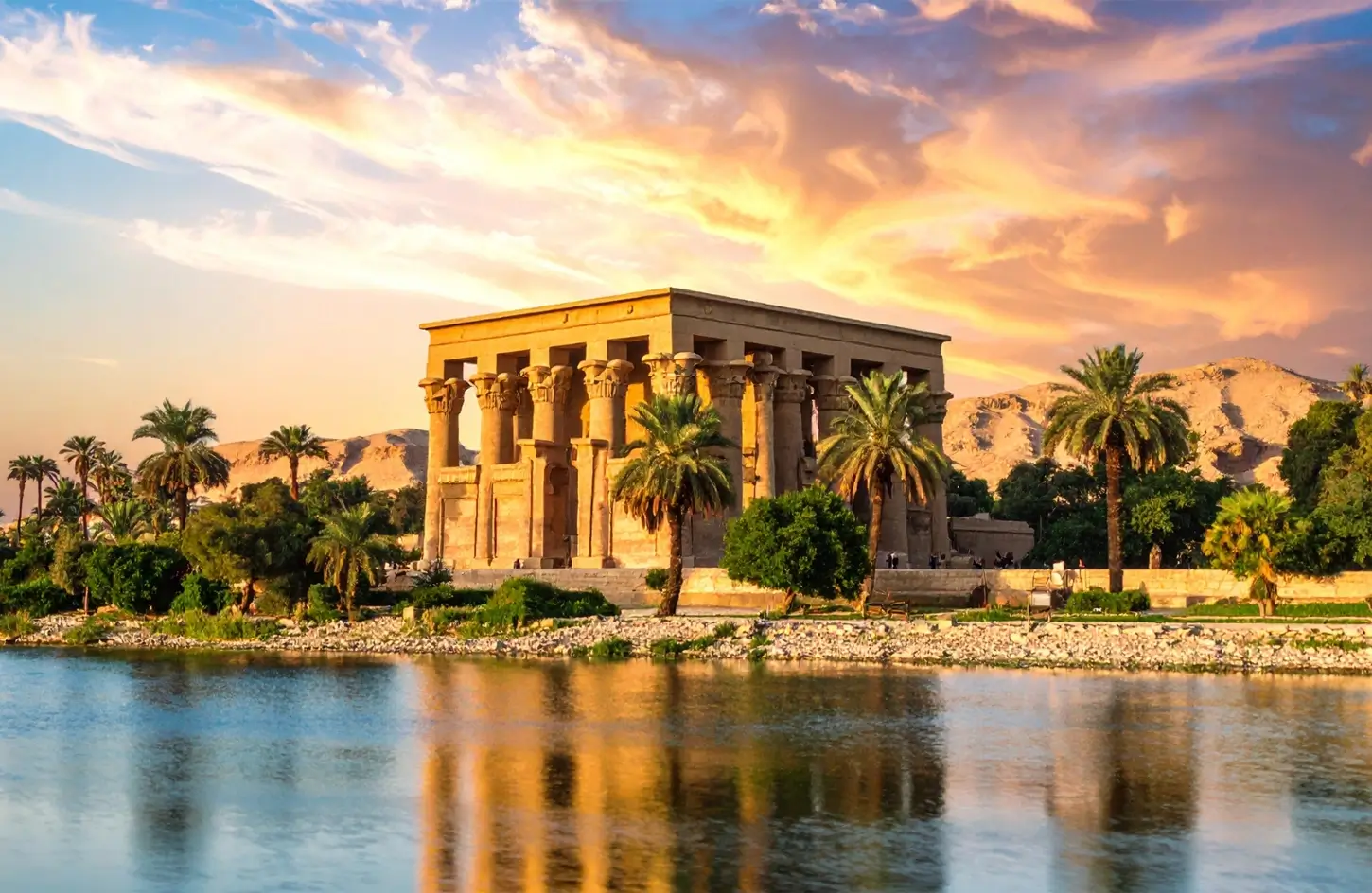
"Karnak Temple" is really shorthand for a vast precinct built up over roughly two thousand years, as pharaoh after pharaoh added pylons, courts, chapels, and obelisks to honor Amun-Re, the chief god of Thebes. It isn't one building but a walled complex of several temple precincts, the largest of which — the Precinct of Amun-Re — is what nearly all visitors mean when they say "Karnak." Because so many different rulers left their mark here across so many centuries, walking through it is genuinely like flipping through the layers of a two-thousand-year building project.
The Great Hypostyle Hall
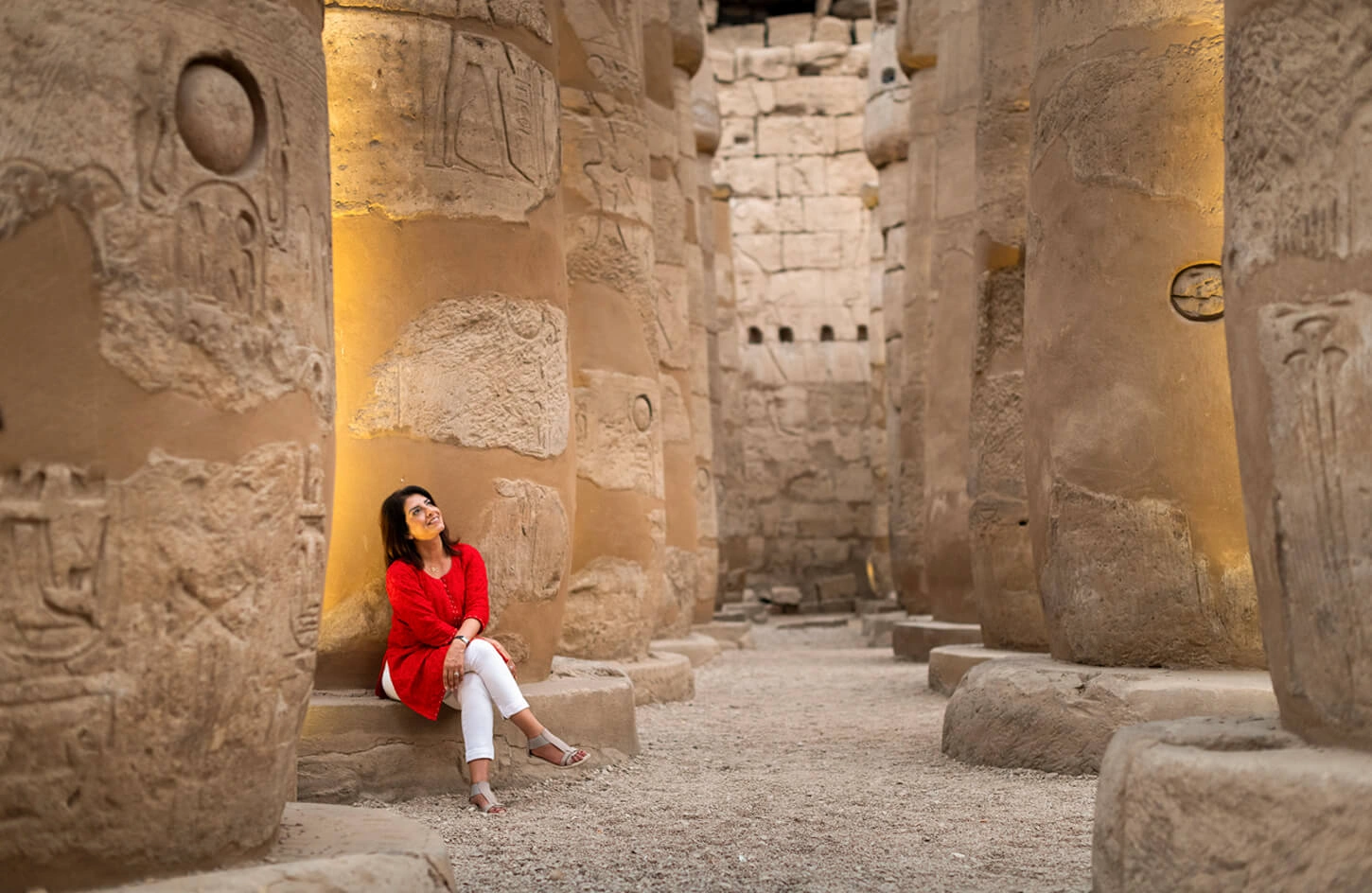
This is the centerpiece, and the reason photographers chase the early light. The hall holds 134 massive sandstone columns carved to resemble papyrus stalks, arranged so that twelve taller columns line the central aisle — each over 20 meters high — with 122 shorter columns filling the space on either side. It was built up over the reigns of Seti I and Ramesses II, and even now, with the roof long gone, standing among the columns gives a real sense of what an enclosed, dim, incense-filled hall must have felt like to ancient worshippers who were never meant to see it in open daylight.
At sunrise, low-angle light comes through the missing roof and gaps between columns, casting long shadows down the hall and picking out the carved relief work in a way that's genuinely different from how it looks by 10 or 11 am, once the sun is high and the light goes flat.
More Than One Temple Behind the Walls
Beyond the Precinct of Amun-Re, the wider Karnak complex includes two smaller, separately walled precincts dedicated to the goddess Mut and the god Montu, along with the remains of a temple built by Amenhotep IV (better known by his later name, Akhenaten) before he abandoned Thebes altogether for his new capital at Amarna. Most cruise excursions focus on the Amun-Re precinct alone, since it holds the vast majority of what's worth seeing on a single visit, but it's a useful reminder that what you're walking through is a fraction of a much larger sacred district that once covered a significant stretch of the Nile's east bank.
The Opet Festival and the Avenue of Sphinxes
The processional way linking Karnak to Luxor Temple wasn't just ceremonial decoration — it was the route of the ancient Opet Festival, an annual celebration in which statues of Amun, his wife Mut, and their son Khonsu were carried in procession from Karnak down to Luxor Temple and back, renewing the pharaoh's divine right to rule. The full avenue, lined on both sides with sphinxes for its entire length, was excavated and reopened to the public a few years ago after a long restoration project, and walking even a short stretch of it near the Karnak entrance gives a sense of how deliberately monumental this approach was meant to feel to ancient visitors arriving on foot or by river barge.
Other Things to See on the Way Through
- The Avenue of Sphinxes at the temple's entrance approach, part of the processional way that once linked Karnak directly to Luxor Temple nearly two miles away.
- The obelisks of Hatshepsut, among the tallest standing obelisks in Egypt, erected by one of the few female pharaohs to rule in her own right.
- The Sacred Lake, used by ancient priests for ritual purification, now a quiet spot to pause partway through the visit.
- The Sacred Scarab statue, a modern-day tradition where visitors walk around it a set number of times for good luck — a fun, low-effort stop most guides will point out.
A Rare Astronomical Alignment
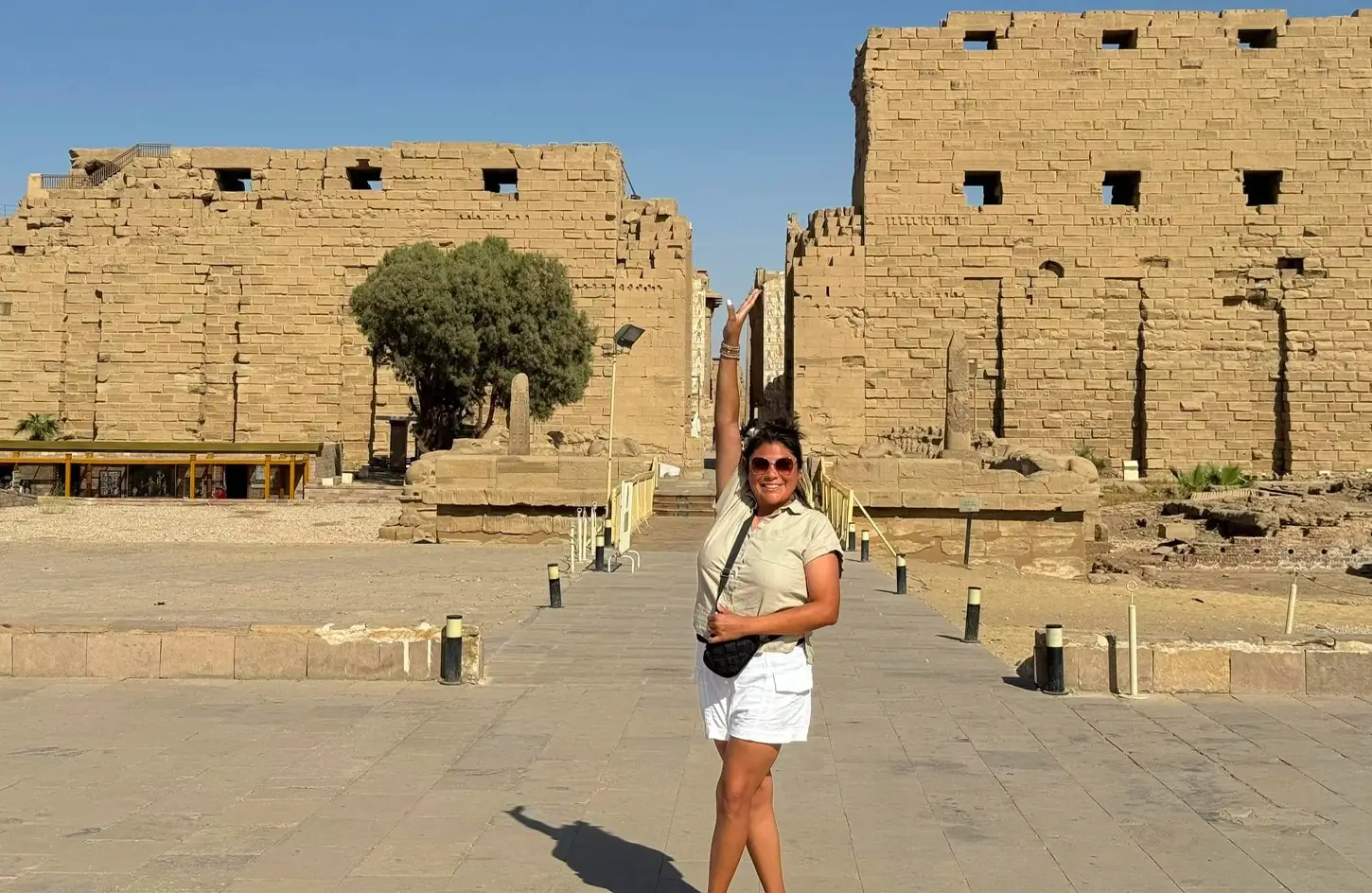
Karnak's builders paid close attention to solar alignment when they laid out the temple's main axis. Around the winter solstice each year, in the pre-dawn hours, sunlight aligns with the temple's eastern entrance, drawing a small crowd of dedicated early risers and photographers. You don't need to time your visit to the solstice to appreciate Karnak at sunrise, but it's a good illustration of how seriously the ancient architects treated the direction of the rising sun across the whole complex — not just at Karnak, but at sites like Abu Simbel further south.
The Reality of Visiting on a Cruise Schedule
Here's the honest caveat: most Nile cruise itineraries visit Karnak as part of a group excursion scheduled for mid-morning rather than at opening time, simply because it's bundled with other logistics — disembarkation timing, breakfast service, coordinating a group of fifty or more passengers. If true sunrise light matters to you, a few options are worth knowing about:
- If you're spending a night in Luxor before or after your cruise, ask about arranging an early, independent visit to Karnak at opening time, separate from the group excursion.
- Some cruise operators can accommodate a smaller private or semi-private excursion timed earlier in the morning — worth asking about when booking, especially on higher-tier cruise packages with more flexible guiding.
- If an early visit isn't possible, Karnak also runs an evening sound-and-light show, which is a completely different (and worthwhile) way to experience the site after dark, with the temple lit dramatically against the night sky.
Practical Tips for an Early Visit
- Wear layers — early mornings in Luxor, especially in winter, can be surprisingly cool before the sun climbs.
- Bring a proper camera or make sure your phone is charged; the light window that makes an early visit worthwhile doesn't last long once the sun is fully up.
- The site is large and mostly unshaded once you're past the columned hall, so even an early start benefits from a hat and water.
- Budget at least two to three hours to see the complex properly — Karnak rewards slow walking, not a rushed loop.
- Hire or request an Egyptologist guide if you can. Signage on site is minimal, and the layers of history here are genuinely hard to parse without context — what looks like one wall of carvings might span three different reigns.
Karnak's Place in the Cruise Itinerary
Karnak is paired with Luxor Temple on the East Bank portion of nearly every Nile cruise, typically on the day you board in Luxor or the day you disembark, depending on the direction you're sailing. It's one of the few sites on a standard itinerary large enough to reward a longer, unhurried visit — which is exactly why the sunrise timing question comes up so often among travelers planning their own extensions.
If an early, more spacious visit to Karnak is a priority for your trip, it's worth mentioning when you book — take a look at Egypt Cruise Trips' Nile cruise itineraries to see which ones build in extra time in Luxor before the sailing begins.