Edfu and Kom Ombo are the two temple stops that appear on essentially every Luxor-Aswan Nile cruise, for a simple geographic reason: they sit roughly along the stretch of river between the two cities, so any ship sailing that route passes directly by them. The Temple of Edfu, dedicated to the falcon god Horus, is one of the best-preserved temples in Egypt and is reached from the dock by a short horse-drawn carriage ride. The Temple of Kom Ombo, a unique double temple built for two gods side by side, sits right on the riverbank, so the ship can dock almost at its front steps.
Temple of Edfu: Egypt's Best-Preserved Temple
Edfu owes its remarkable condition to an accident of history: for centuries, the temple lay buried under desert sand and the mudbrick houses of a town built on top of it, which shielded it from the wind erosion, stone-robbing, and structural collapse that damaged more exposed sites. It wasn't fully excavated until the 19th century, by which point it had been protected from most of the wear that affected temples left standing in the open for two thousand years.
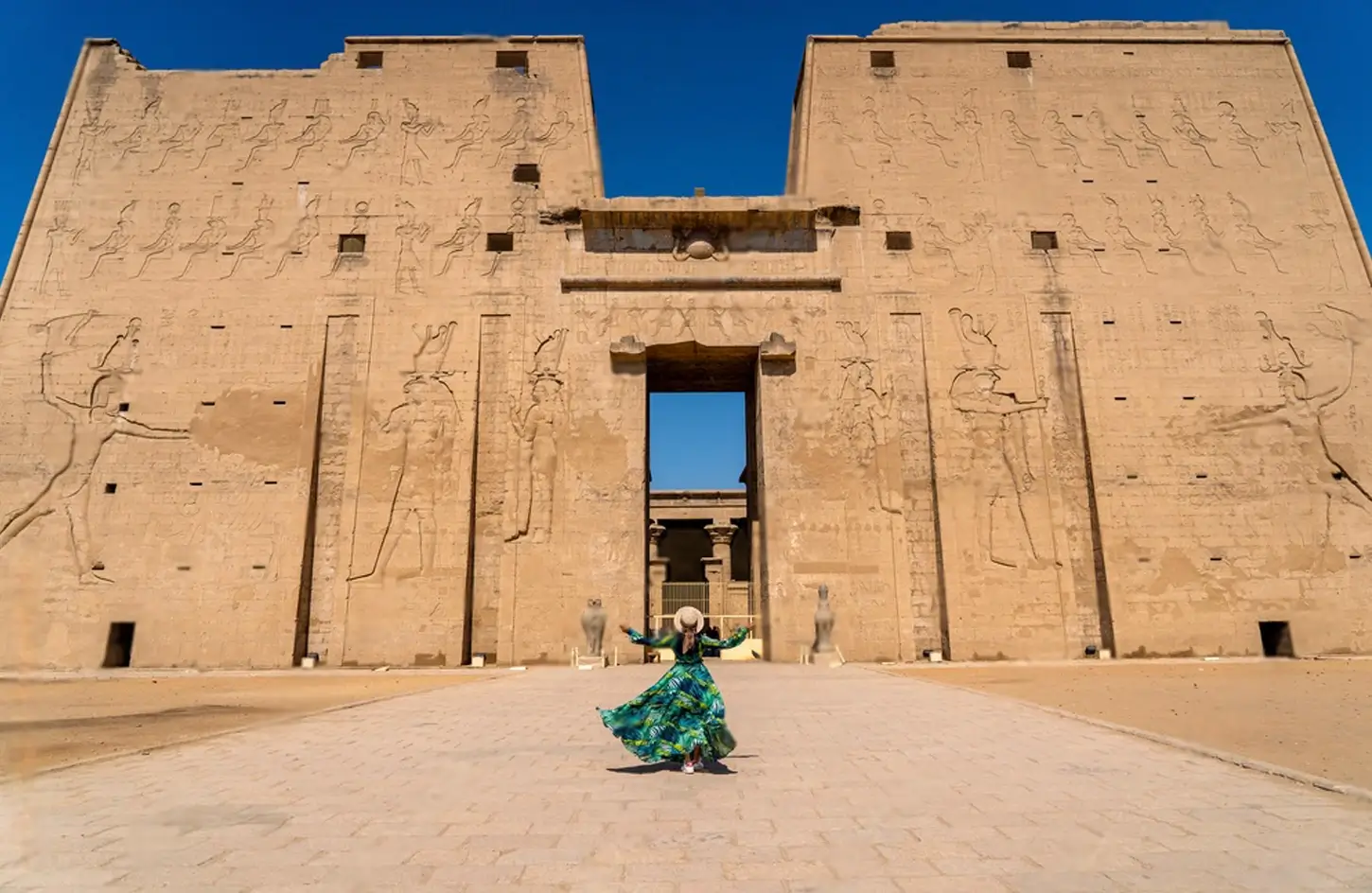
The temple was built during the Ptolemaic period — the era of Greek-descended pharaohs that followed Alexander the Great's conquest of Egypt — and dedicated to Horus, the falcon-headed god associated with kingship. What makes it worth the stop:
- An intact roof and pylon — rare among Egyptian temples, and it gives you a genuine sense of the enclosed, dim interior spaces as they were actually used, rather than the roofless ruins found at most other sites.
- Detailed relief carvings, including scenes recounting the mythological battle between Horus and Seth, inscribed on the temple's inner walls almost like an ancient comic strip.
- A granite falcon statue of Horus guarding the entrance, one of the most photographed single objects on the whole cruise route.
- A well-preserved sanctuary at the temple's core, where a stone shrine that once held the god's cult statue still stands.
Getting There: The Horse-Drawn Caleche
Because Edfu's dock sits a short distance from the temple itself, the traditional way to cover that stretch is by caleche — a small horse-drawn carriage that lines up along the corniche waiting for cruise passengers. It's a quick ride, no more than about ten minutes, but it's become part of the Edfu experience in its own right, clattering through the town's streets rather than being shuttled in on an air-conditioned bus. Drivers appreciate a small tip beyond whatever fare is arranged through your cruise excursion, and it's worth having a little local currency on hand for exactly this kind of moment.
The Myth Carved Into the Walls
The reliefs at Edfu aren't just decoration — read in sequence, they retell one of ancient Egypt's central myths: Horus's battle to avenge his father Osiris, who was murdered by his brother Seth. Seth is repeatedly shown as a hippopotamus, harpooned by Horus in scene after scene along the temple's inner walls, a story that would have been read aloud or explained by priests to the literate few who could access the temple's inner chambers in antiquity. The temple also preserves inscriptions describing its own construction and consecration in unusual detail, which is part of why it has been so valuable to modern Egyptologists working out how temples of this period were actually built, staffed, and used.
Temple of Kom Ombo: A Temple Built for Two Gods
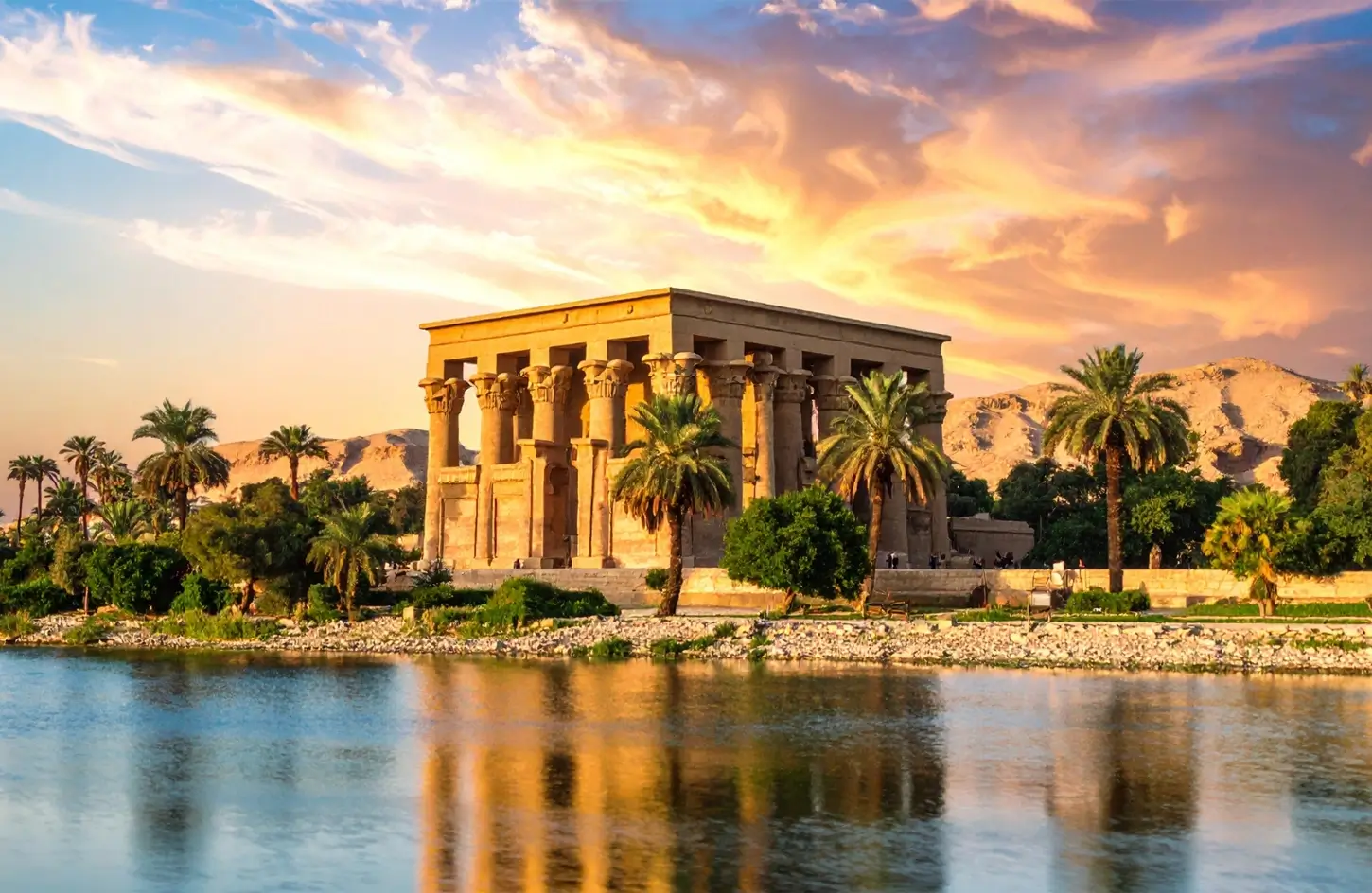
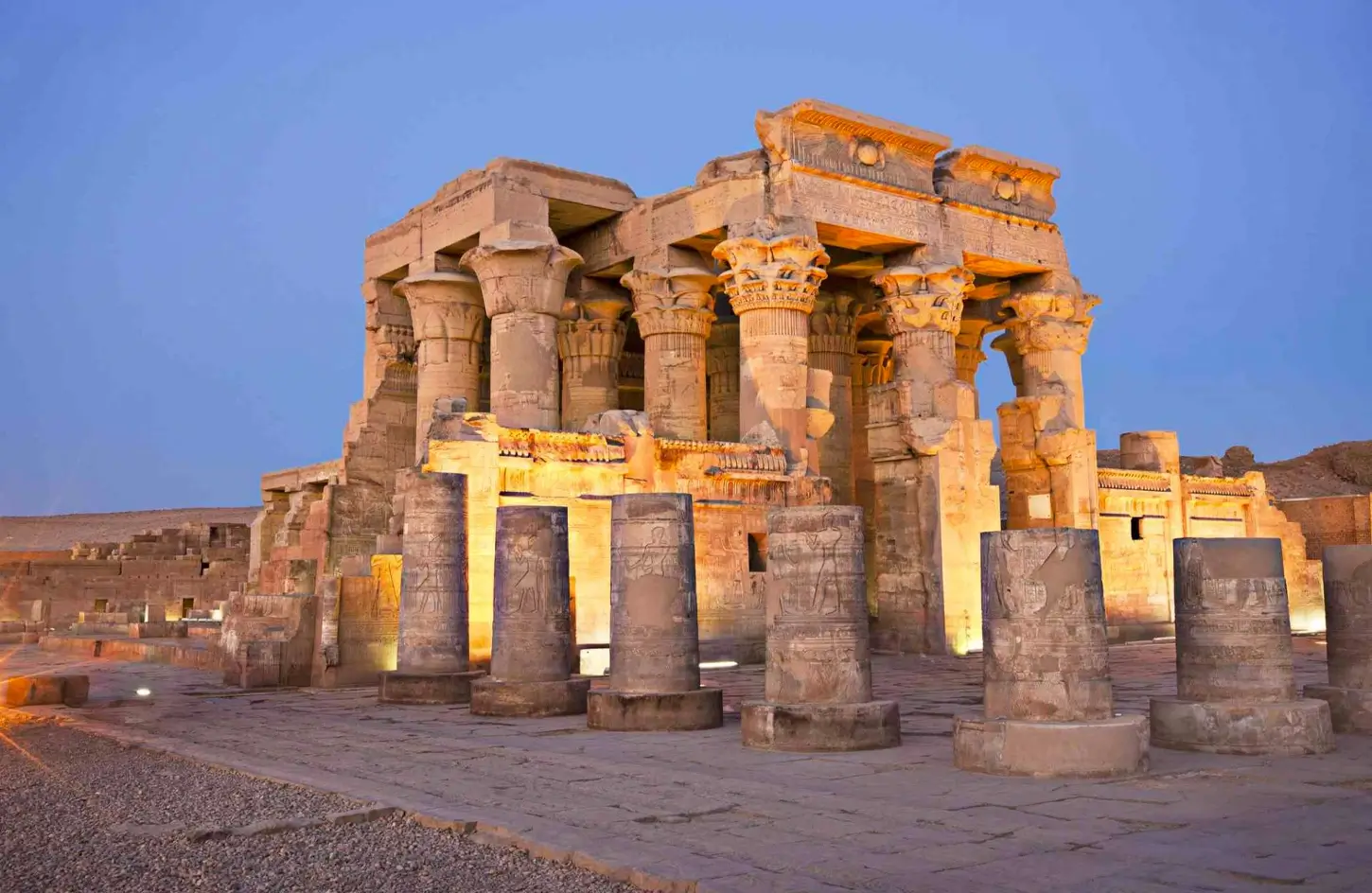
Kom Ombo is architecturally unusual: rather than being dedicated to a single god, it's a symmetrical double temple, split down the middle, with matching halls, sanctuaries, and courts duplicated on either side. One half is dedicated to Sobek, the crocodile god associated with fertility and Nile power, and the other to Horus the Elder, a falcon-headed sky god. The dual design meant priests could conduct rituals for both deities in parallel without either side taking precedence — a rare piece of religious diplomacy carved into stone.
Because it sits directly on a bend in the river, Kom Ombo is one of the few major temples where the cruise ship can dock right beside the site, meaning there's no carriage ride or long transfer — you disembark and you're essentially at the entrance.
- The mirrored layout is the single most distinctive feature — look for the matching pairs of doorways, halls, and sanctuaries running down the temple's central axis.
- Nilometer — a stone-cut well used in antiquity to measure the Nile's flood levels, still visible on the temple grounds, and a good conversation piece about how closely Egyptian religious and agricultural life were intertwined.
- The Crocodile Museum, adjacent to the temple, houses a collection of mummified crocodiles recovered from nearby burial sites — a vivid, slightly startling reminder of how literally the Sobek cult took its association with the animal.
Kom Ombo is frequently scheduled for late afternoon or early evening on cruise itineraries, and the temple's warm stone columns lit by a low sun are one of the more memorable photo opportunities of the whole trip.
Why the Riverbank Location Made Kom Ombo Vulnerable
Kom Ombo's position, so close to the Nile's edge, is exactly why it's convenient for cruise ships today — and exactly why the temple has suffered more structural damage over the centuries than a site like Edfu, which was protected under sand further from the water. Parts of the temple have been lost to riverbank erosion and at least one recorded earthquake, and some of the outer sections visitors see today are partially reconstructed from fallen blocks rather than fully original standing walls. It's worth mentioning to your guide if you're curious which sections are original construction and which have been re-erected, since the difference isn't always obvious at a glance.
How the Two Stops Fit Together on a Cruise
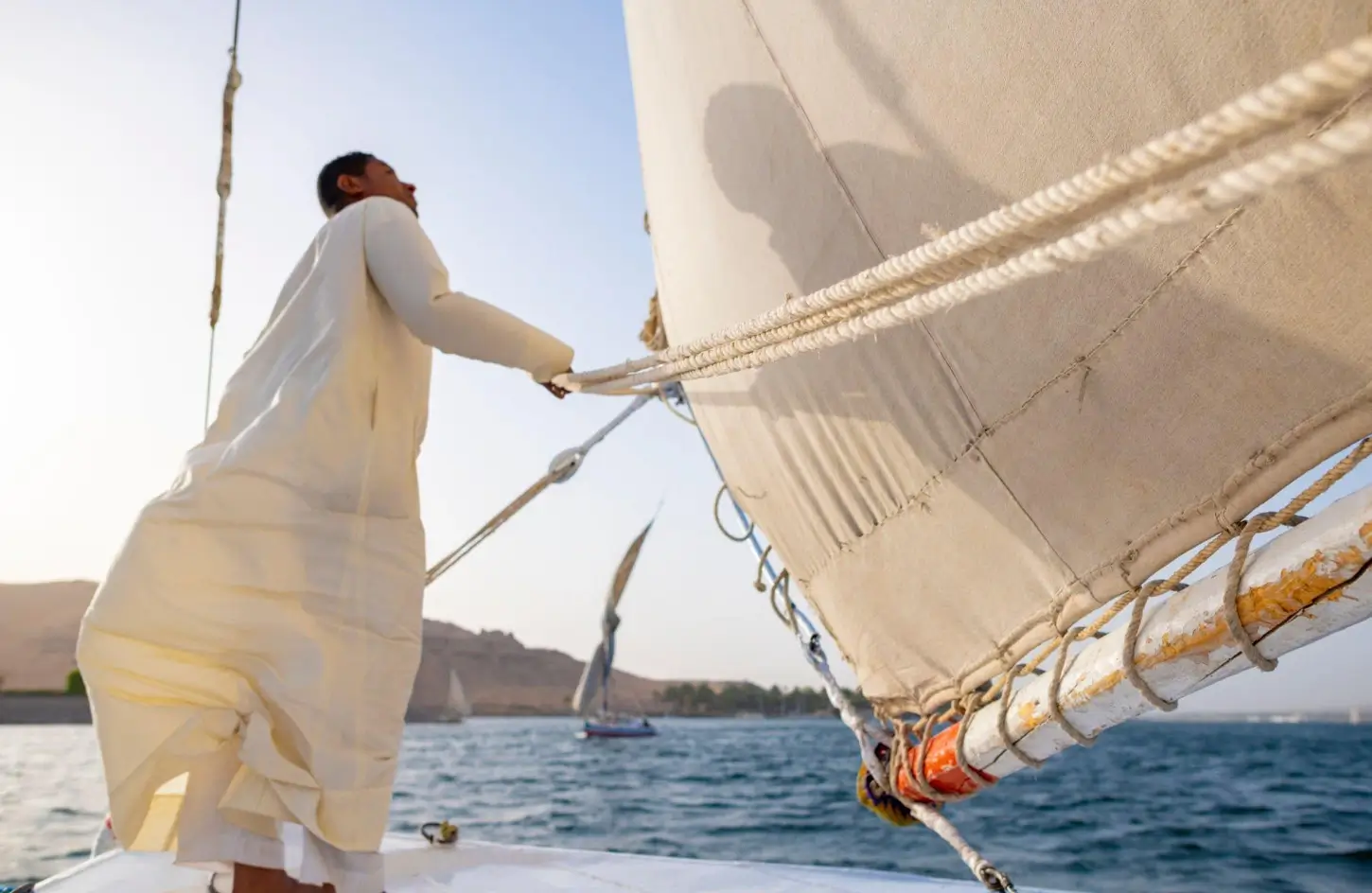
Sailing south from Luxor toward Aswan, ships typically stop at Edfu first, then continue on to Kom Ombo later the same day or the next morning; sailing north from Aswan, the order reverses. Because both stops sit between the two anchor cities, they're almost always paired within a single 24-hour stretch of the cruise, with sailing time on the river filling the gaps in between.
- Wear comfortable shoes for uneven ground at both temples.
- Bring small bills for caleche tips at Edfu and for any museum entry at Kom Ombo.
- A hat and water are worth having at both stops — there's little shade at either site.
- If you're a photographer, ask your guide about Kom Ombo's typical visit time on your specific itinerary; a late-afternoon slot here is worth planning around.
Two Temples, One River
Edfu and Kom Ombo aren't the most famous names on an Egypt itinerary the way Karnak or the Valley of the Kings are, but they're arguably where a Nile cruise feels most like itself — sailing between two ancient sites that have sat on this same stretch of river for over two thousand years, visited the old-fashioned way, by boat.
They're also a good pair for travelers who find the biggest sites in Luxor slightly overwhelming. Neither Edfu nor Kom Ombo demands the same multi-hour, multi-stop stamina that a full day on Luxor's West Bank does — each is a self-contained, roughly hour-long visit, easy to absorb without a guidebook's worth of prior reading, and both reward simply looking closely at what's directly in front of you: a carved battle scene, a mirrored doorway, a Nilometer's stone steps disappearing into the dark. For many travelers, these two stops end up being an unexpectedly restful counterpoint to the busier days in Luxor and Cairo.
Both stops are included as standard on every route listed under Egypt Cruise Trips' Nile cruises, from the standard sailing through to the luxury tier.