If you have to choose, Luxor generally rewards more time because it holds a denser concentration of major sites — Karnak, Luxor Temple, the Valley of the Kings, and the Temple of Hatshepsut are all effectively must-sees, and rushing them means missing things. Aswan is smaller and more relaxed, with fewer essential sites but a distinct Nubian character, river scenery, and easier access to Abu Simbel. On a standard Nile cruise, this is already reflected in the schedule — Luxor typically gets a day and a half to two days, Aswan gets closer to one — but if you're planning independent time beyond the cruise, the right split depends on what you're actually there for.
What Luxor Offers
Luxor sits on the site of ancient Thebes, capital of Egypt during much of the New Kingdom, and the sheer density of major monuments here is unmatched anywhere else on the Nile cruise route.
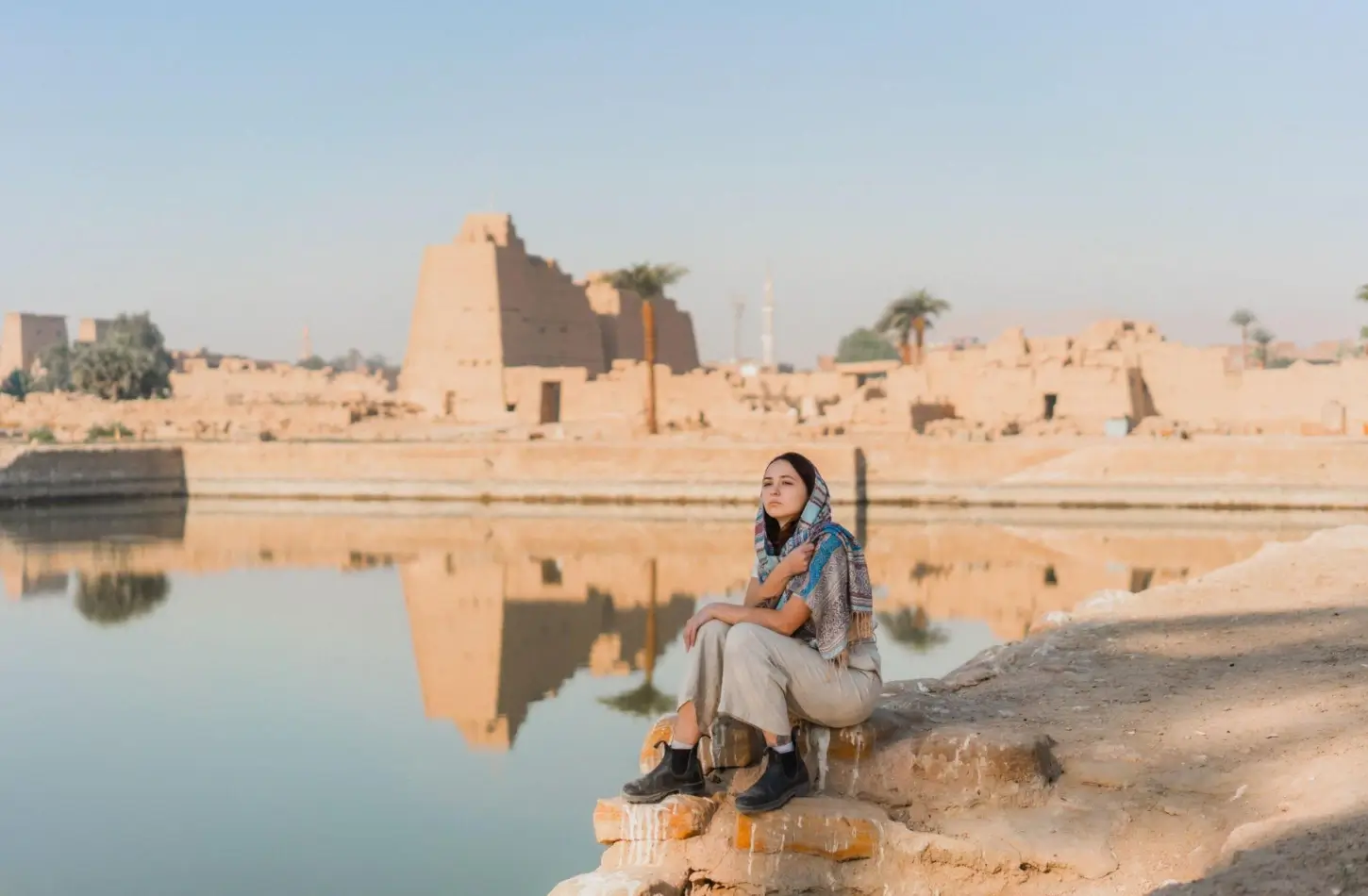
- Karnak Temple — the largest religious complex to survive from the ancient world, built up over roughly two thousand years by successive pharaohs.
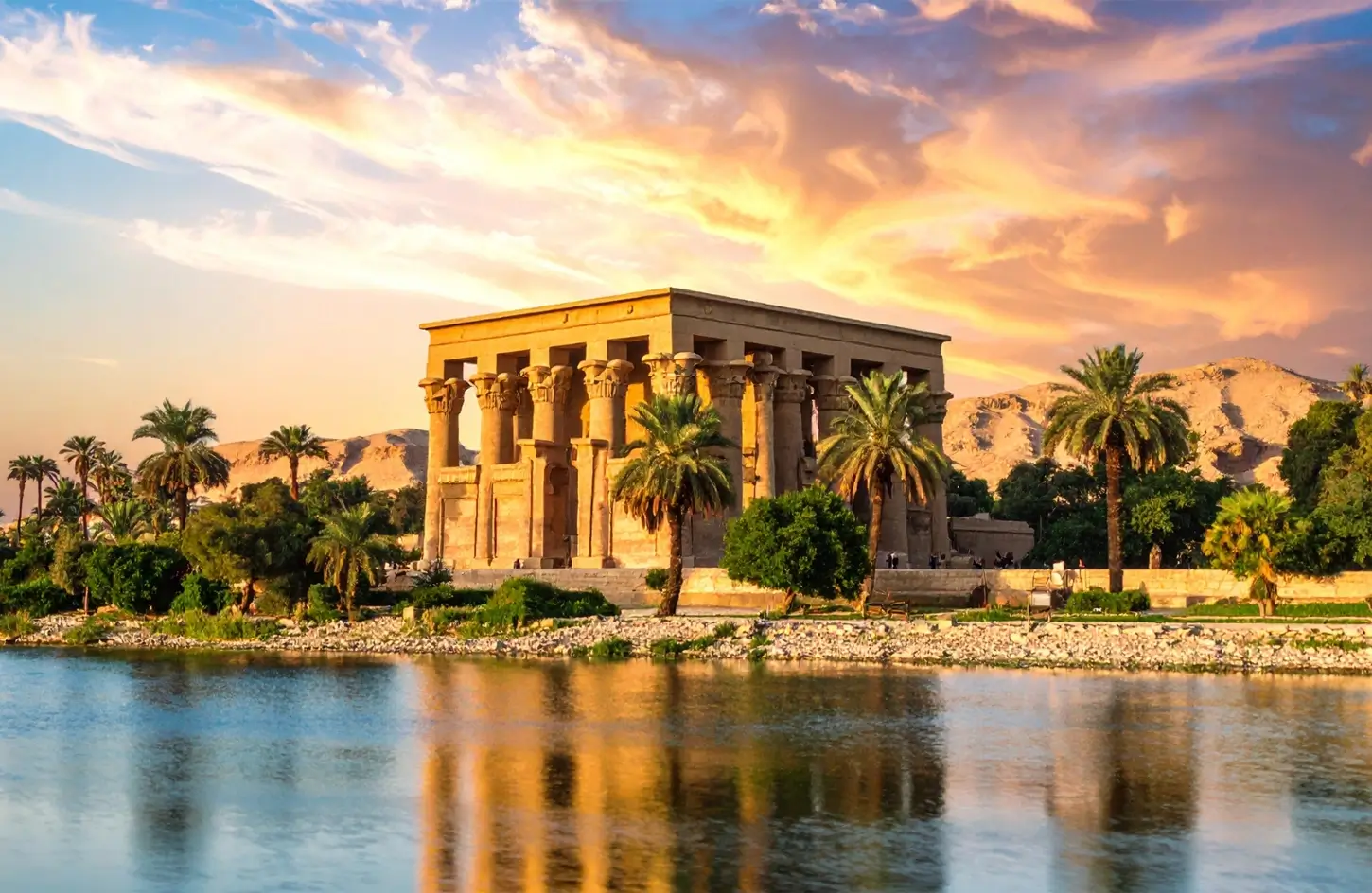
- Luxor Temple — smaller and more contained, especially striking when floodlit after dark.
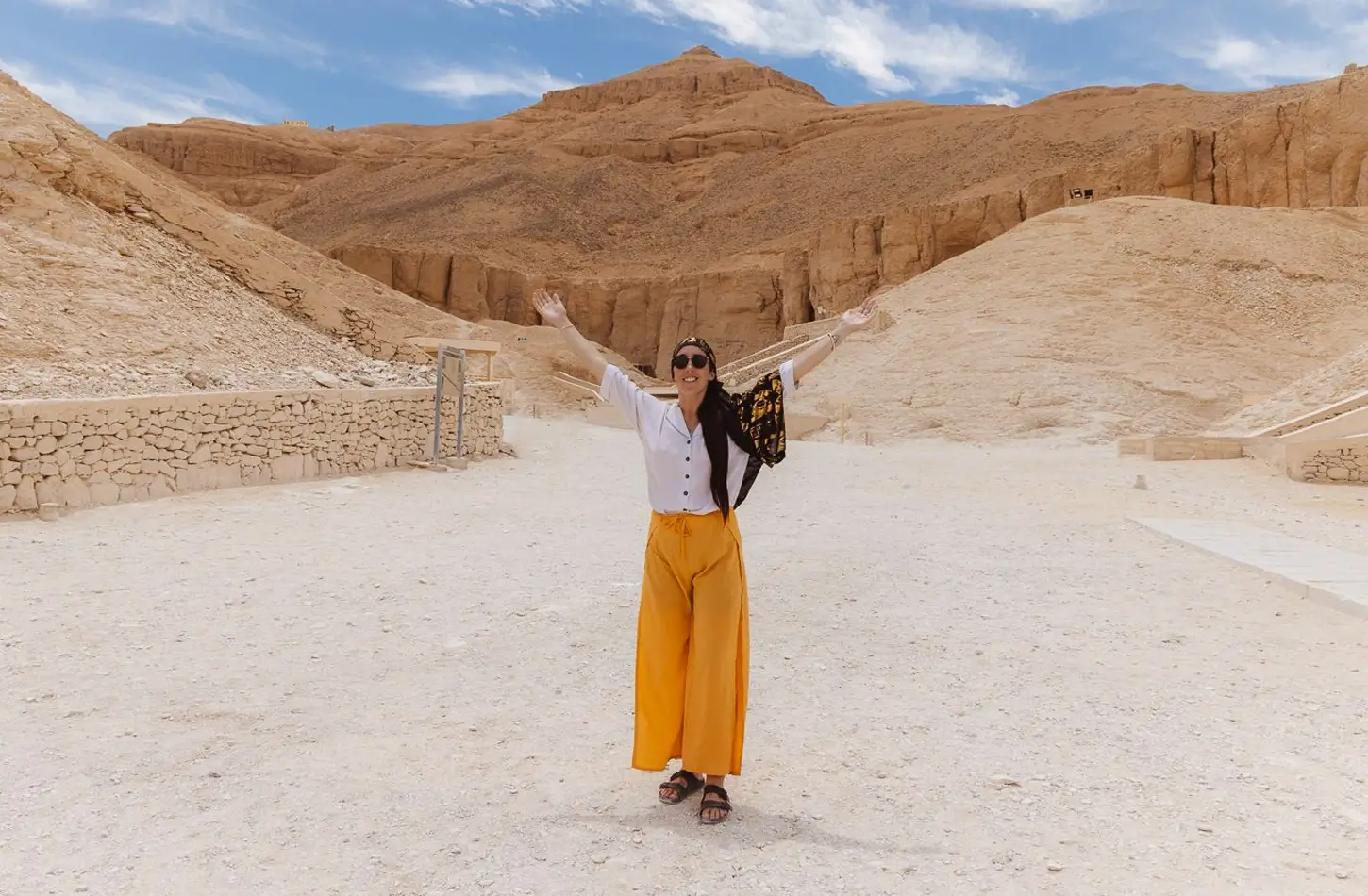
- The Valley of the Kings — the burial ground of New Kingdom pharaohs, including Tutankhamun, on the West Bank.
- The Temple of Hatshepsut — a dramatic terraced mortuary temple set against the cliffs at Deir el-Bahari.
- The Colossi of Memnon, the Valley of the Queens, and numerous smaller tombs and temples that a longer stay lets you actually get to.
Luxor is often described as an "open-air museum" for good reason — it's genuinely difficult to see everything worth seeing in a single day, and most travelers who've done a standard cruise stop here say afterward that they wished they'd had more time, particularly for the West Bank, which alone could fill most of a day if you slow down and explore beyond the three or four headline sites.
What Aswan Offers
Aswan feels different the moment you arrive — smaller, quieter, and shaped by its position at Egypt's southern border with Sudan and its long history as a gateway to Nubia.
- Philae Temple — reached by a short boat ride, with a remarkable relocation history tied directly to the Aswan High Dam.
- The Aswan High Dam — a functioning piece of modern infrastructure and a quick but worthwhile stop for context on the whole region's story.
- The Unfinished Obelisk — a hands-on look at ancient quarrying techniques.
- Nubian villages and markets, with distinct architecture, music, and cuisine compared to the rest of Egypt.
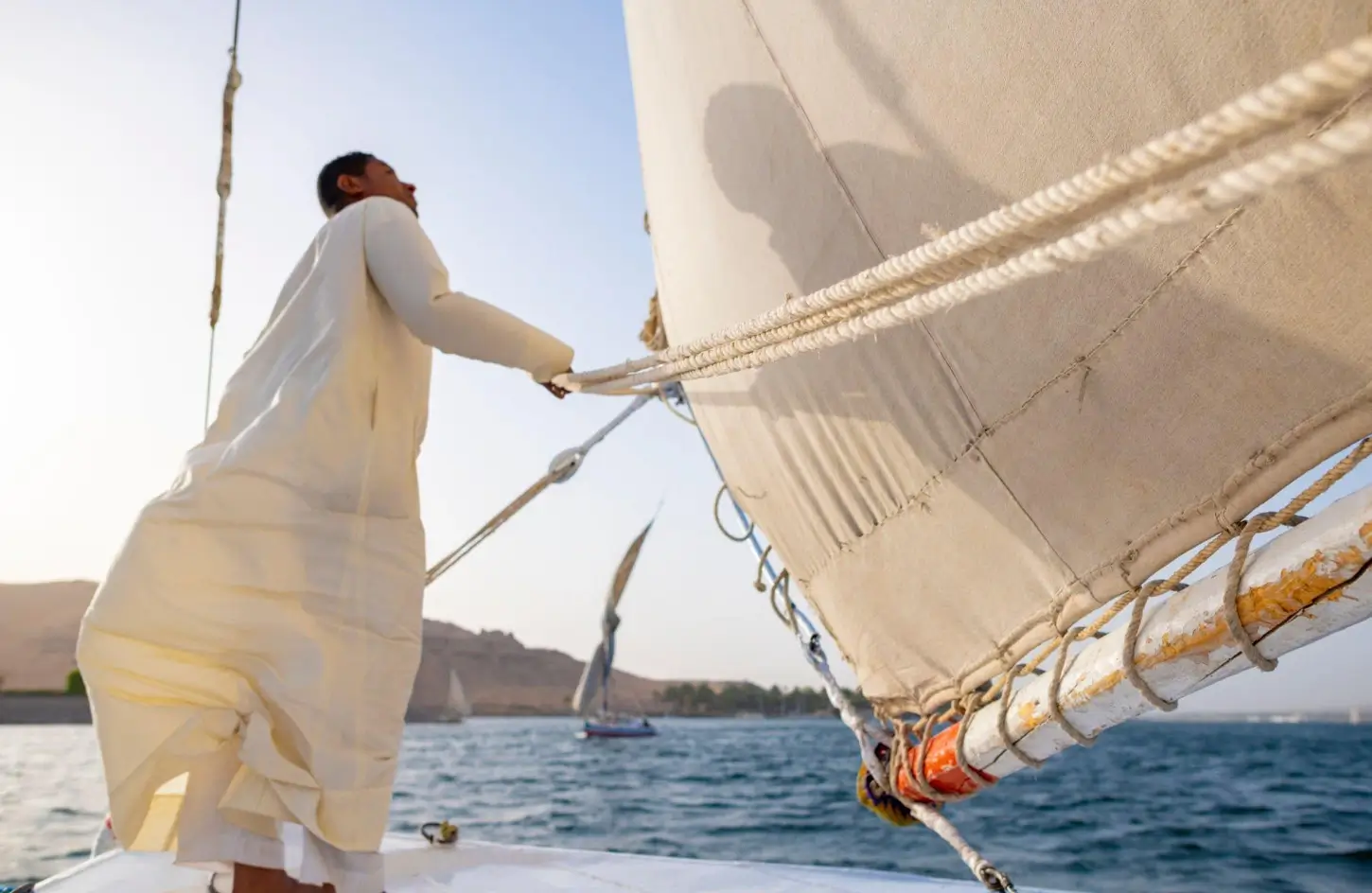
- Felucca sailing around Elephantine Island and the Aga Khan Mausoleum — one of the more purely relaxing things to do anywhere on a Nile cruise.
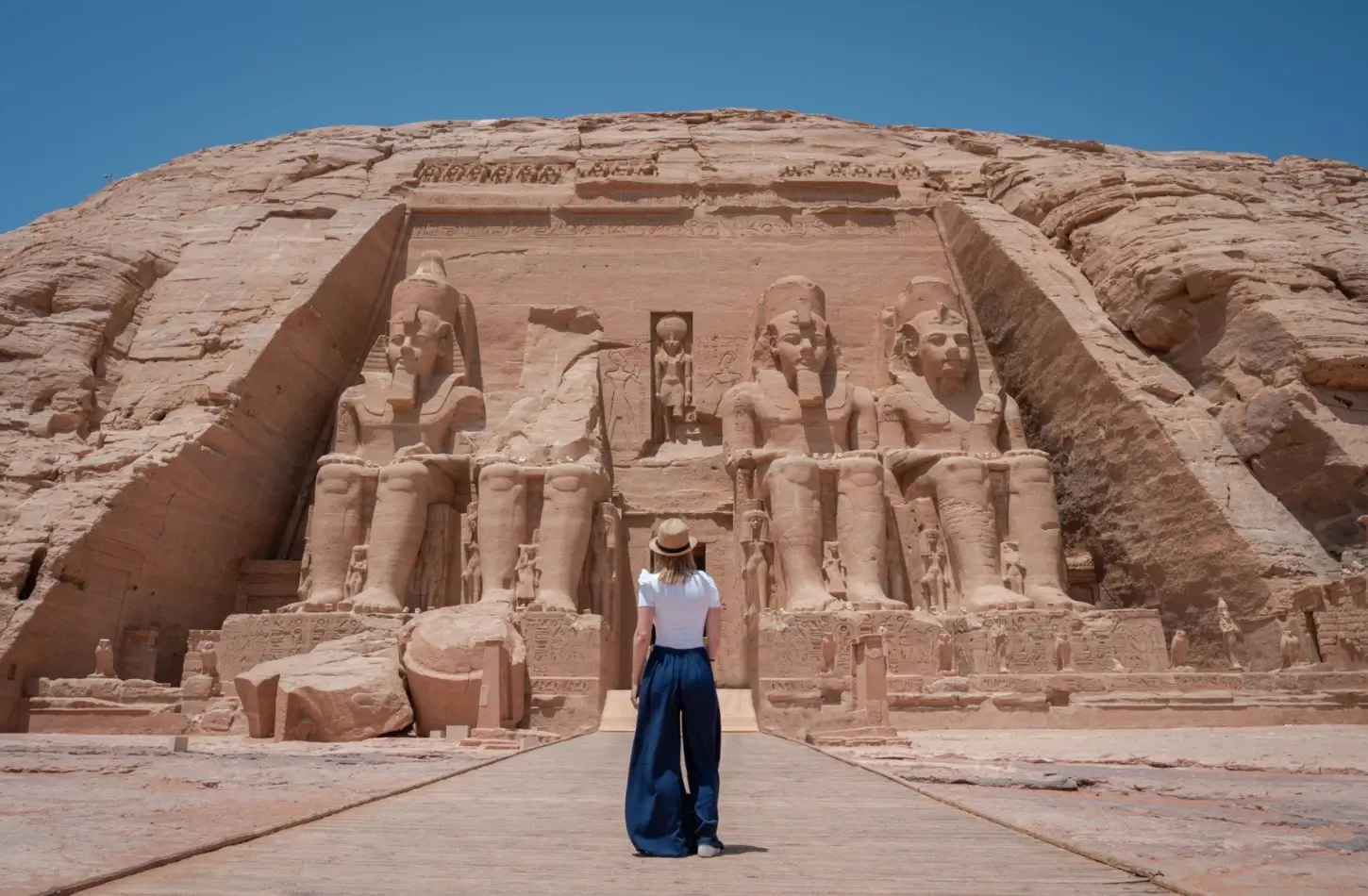
- Abu Simbel, reachable only from Aswan, as a full- or half-day add-on.
Aswan's sightseeing list is shorter, but what's here tends to be less crowded and more atmospheric — a felucca sail at sunset or a wander through a Nubian village doesn't reward extra time the way a dense archaeological site does; it's simply a different, slower kind of value.
Why Each City Grew Where It Did
The difference in character isn't accidental — it comes from what each city actually was in antiquity. Luxor was Thebes, the religious and political capital of Egypt for much of the New Kingdom, which is why it accumulated such a dense concentration of state-funded temples and royal tombs over centuries of continuous investment by successive pharaohs. Aswan, by contrast, was a frontier and trading town at Egypt's southern edge, sitting at the Nile's First Cataract — a stretch of rapids that historically marked the practical southern limit of easy river navigation. Its granite quarries supplied obelisks and colossal statues to building projects across the whole of Egypt (including, indirectly, some of what you'll see in Luxor), but Aswan itself was never the seat of religious power that Thebes was, which is a large part of why it simply doesn't have the same density of major monuments today.
Climate and Pace Differences
Aswan sits further south and generally runs slightly hotter and drier than Luxor for much of the year, though both cities share Upper Egypt's broader desert climate and the same general travel seasons. More noticeable than the climate difference is the pace: Luxor's sightseeing days tend to be tightly scheduled around opening hours, heat, and crowd timing at major sites, while Aswan more easily allows for unstructured stretches — a slow afternoon by the river, a felucca sail with no fixed itinerary, or simply sitting at a riverside café watching boat traffic on the Nile. Travelers who find Luxor's pace a little relentless often specifically mention Aswan as the place they finally exhaled.
How to Decide
Favor extra time in Luxor if:
- You're most interested in ancient history and want to go deeper than the headline sites — smaller tombs in the Valley of the Kings, the Valley of the Queens, or Medinet Habu, for instance.
- You want to see Karnak both at a relaxed morning pace and again lit up at night.
- You're a photographer who wants flexibility around light and crowds at the major sites rather than a fixed group-tour schedule.
Favor extra time in Aswan if:
- You want to add Abu Simbel without feeling rushed — it's a long day on its own, and having a spare day in Aswan either side makes it much less stressful.
- You're drawn to Nubian culture, markets, and a slower travel pace more than dense monument-hopping.
- You want unstructured time on the water — felucca sailing, riverside cafes, watching the light change over Elephantine Island — rather than another packed sightseeing itinerary.
What a Standard Cruise Already Does
It's worth remembering that most Nile cruise itineraries already build in this imbalance for you: Luxor typically gets a full day plus an evening or morning at the start or end of the cruise, covering both the East and West Banks across two separate outings, while Aswan usually gets a single, more compact half-day to full-day sightseeing block. This isn't an oversight — it reflects how the sites themselves are distributed. If the standard split feels right to you, there's no need to adjust anything; if you know in advance that Abu Simbel or a slower pace in Aswan matters more to you, that's worth flagging when you book so extra time can be built in before or after the standard cruise dates.
If You Can Only Answer in One Sentence
Choose extra time in Luxor if you'd rather go deeper into ancient Egyptian history than see everything on offer; choose extra time in Aswan if you'd rather slow down, add Abu Simbel without stress, and experience a genuinely different regional culture within the same country. Most travelers, given the choice, end up splitting the difference rather than picking one extreme — a single extra night wherever your itinerary already leans is usually enough to notice the difference, without requiring a full rebuild of your trip.
Both, Either Way
The good news is that a Nile cruise makes this a lower-stakes decision than it might be for a land-only trip, since a standard itinerary covers both cities as a matter of course — the real choice is simply whether to add extra nights at one end or the other. If you know you'll want more time in Aswan for Abu Simbel, or more time in Luxor for its temples and tombs, browse Egypt Cruise Trips' Nile cruise options and look at which sailings offer pre- or post-cruise stays in each city, across the standard, deluxe, and luxury tiers.