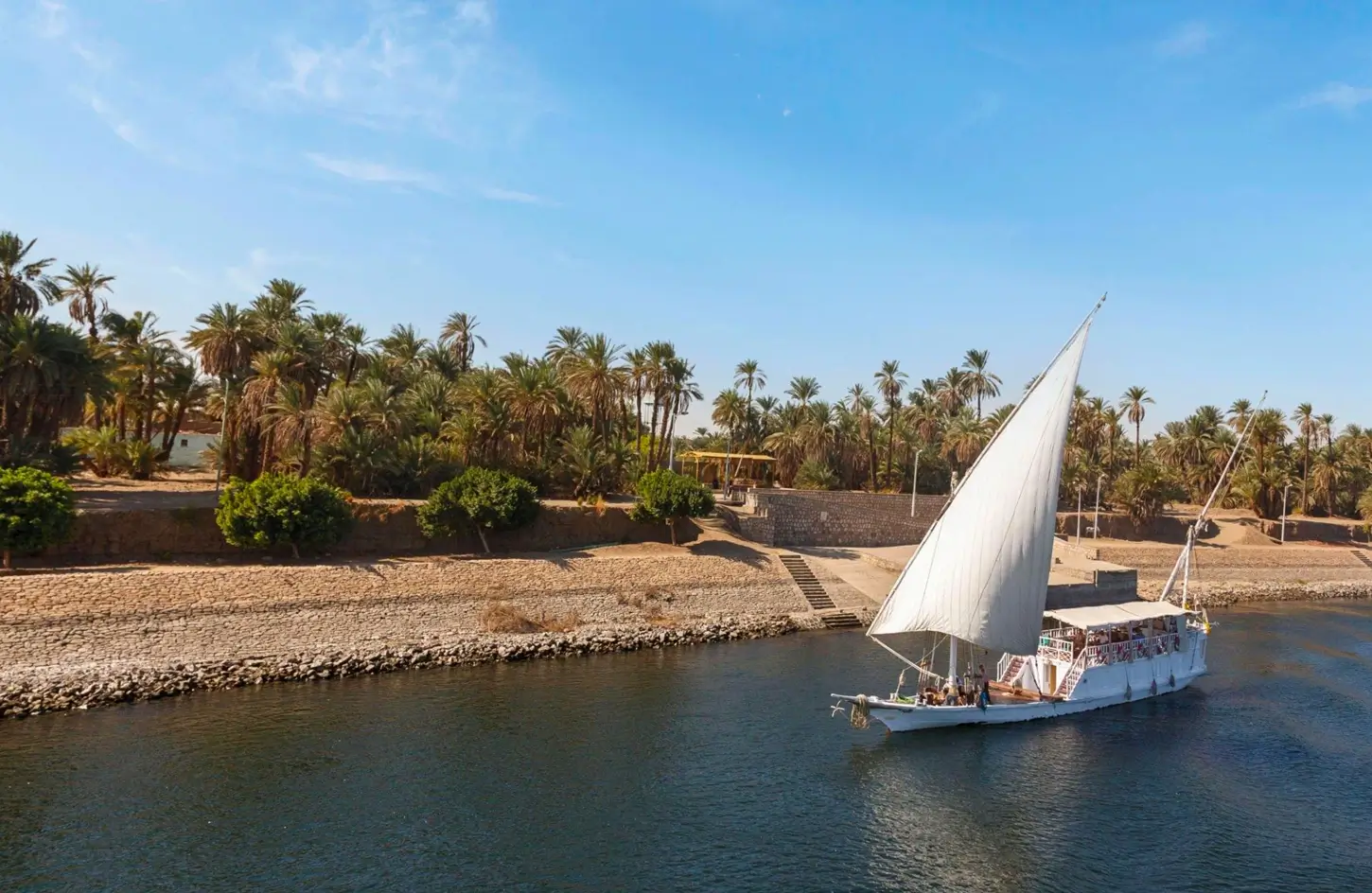
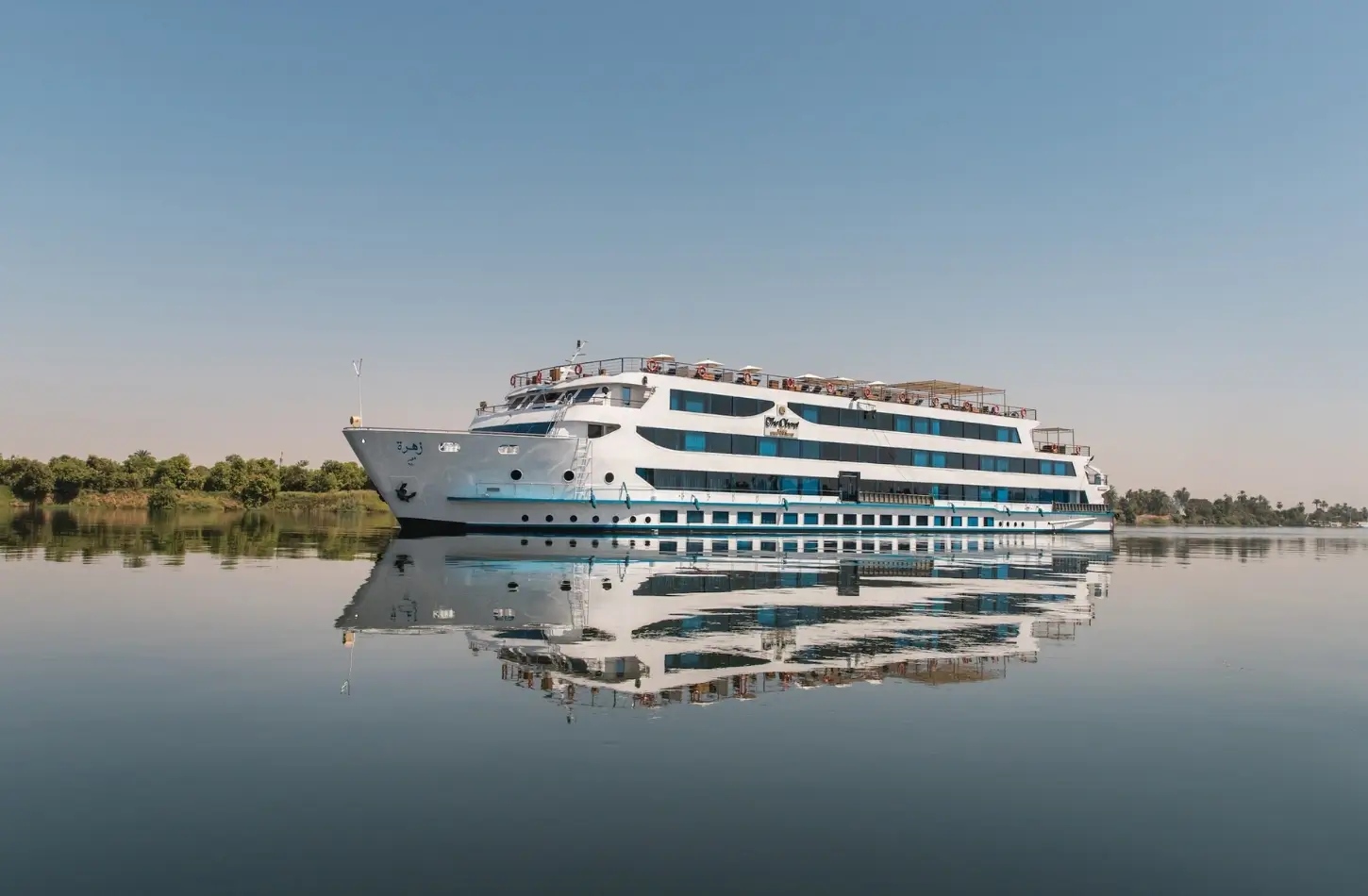
A standard Nile cruise ship carries 80-130+ passengers on a fixed schedule between Luxor and Aswan, with full onboard amenities and a lively, hotel-like atmosphere; a dahabiya is a small, 8-to-16-cabin traditional sailboat carrying a fraction of that number, moving at a slower, wind-driven pace with a more intimate, personal feel. Choose a standard Nile cruise if you want efficiency, amenities, and the lowest starting price (from around $400 per person); choose a dahabiya if you want a quieter, more immersive trip and don't mind paying more for it (from around $1,650 per person for 4 nights). Neither is objectively "better" — they're different products built for different travelers.
What a Dahabiya Actually Is
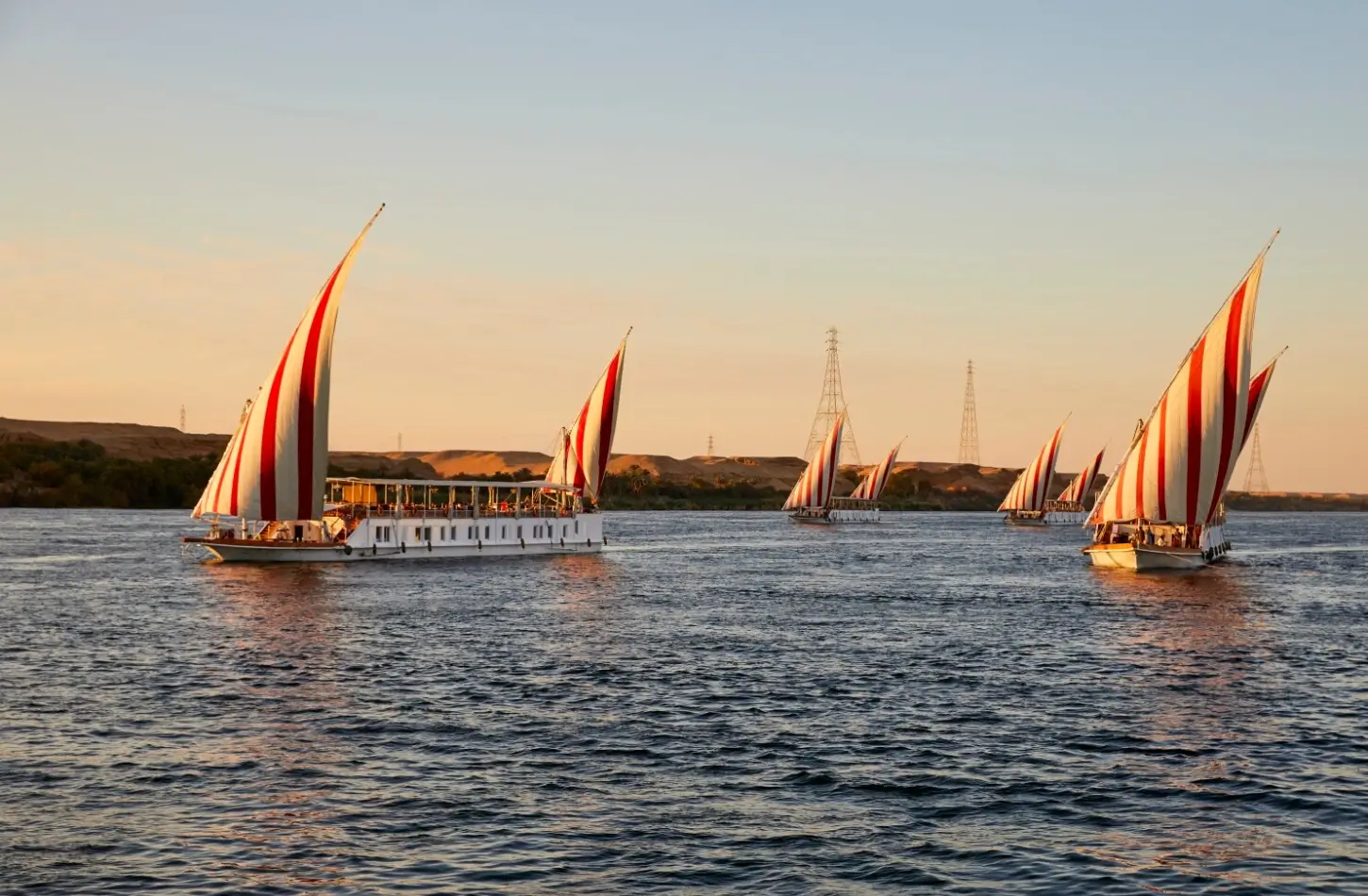
A dahabiya is a traditional wooden sailing vessel with twin lateen sails, historically the way wealthy travelers (and Egyptologists) moved along the Nile before engine-powered cruise ships existed. Modern dahabiyas keep the look and, on many routes, a genuine reliance on wind and current, sometimes paired with a small auxiliary engine for when the wind won't cooperate. They typically carry somewhere between 8 and 16 cabins, meaning a full sailing might have anywhere from a handful of guests up to around 30 — nothing like the 100+ passengers on a large motor cruiser.
Ship Size and Atmosphere
This is the single biggest difference, and it shapes almost everything else about the trip:
- Nile cruise ships feel like small floating hotels — multiple decks, a large dining room, a pool, a bar, a lounge with nightly entertainment, and dozens of other passengers around you at any given time.
- Dahabiyas feel like a private yacht. With so few cabins, you'll get to know your fellow passengers and the crew by name within a day, meals are often taken together at a single table, and there's no scramble for a sun-deck lounger.
If you want the energy and social buzz of a bigger ship, a standard, deluxe, or luxury cruise will feel right. If you'd rather trade that buzz for quiet and space, a dahabiya is the better fit.
Pace and Itinerary
Cruise ships run on a tight, well-worn schedule — a typical Luxor-Aswan sailing covers the major temples in 3 or 4 nights, timed around engine travel and fixed docking slots shared with other ships. Dahabiyas move at the pace of the wind, which means:
- Sailings are often a night or two longer for the same general route, since they're not racing a diesel-powered timetable.
- A dahabiya's shallow draft lets it moor at smaller, less-visited sites that big ships can't easily reach — quieter temple stops and riverside villages that don't see the same crowds.
- Itineraries are more flexible day-to-day; a dahabiya crew can adjust the day's plan around wind conditions in a way a fixed-schedule cruise ship cannot.
Cabins and Onboard Comfort
Don't assume "smaller boat" means "rougher trip." Dahabiya cabins are generally comparable in comfort to deluxe or luxury cruise cabins — often with large windows or a private terrace, and the same essentials (air conditioning, en-suite bathroom) you'd expect on any full-board Nile sailing. What you generally won't get on a dahabiya is a large multi-deck ship's worth of amenities: no big pool, no gym, no nightclub. Instead, most dahabiyas offer a shaded upper deck, comfortable lounging areas, and sometimes a small plunge pool. If a big ship's onboard facilities (pool, gym, entertainment) matter more to you than a small-group feel, that points toward a standard, deluxe, or luxury cruise ship rather than a dahabiya.
Dining On Board
Both options are typically full-board, but the dining format reflects the same size difference as everything else. On a cruise ship, meals are served buffet-style (standard tier) or with a mix of buffet and à la carte service (deluxe and luxury tier) in a large dining room seating the full passenger list across multiple tables. On a dahabiya, meals are often served at a single communal table, sometimes prepared to order in smaller batches by a dedicated onboard chef, with more flexibility to accommodate dietary requests simply because there are far fewer guests to cook for. Neither is inherently better — it's a question of whether you'd rather have more menu variety (cruise ship) or a more personal, home-cooked feel (dahabiya).
Availability and Booking Flexibility
Standard, deluxe, and luxury cruise ships run frequent, near-daily departures in both directions along the Luxor-Aswan route, which makes them easier to slot into a fixed travel schedule on short notice. Dahabiyas run far fewer weekly departures, since each vessel carries so few cabins and sailing depends partly on wind conditions and river levels — availability can be tighter, especially in peak season (November through February), and it's worth booking a dahabiya further in advance than you might a standard cruise ship if your travel dates aren't flexible.
Common Questions
Is a dahabiya safe and comfortable, or is it a "rougher" way to see the Nile?
Modern dahabiyas are comfortable — cabins have air conditioning and en-suite bathrooms, and most have a small backup engine for when wind conditions require it. What you're giving up compared to a big ship is scale (no pool, no gym, no entertainment program), not basic comfort or safety.
Do dahabiyas visit different temples than standard cruise ships?
Largely the same major sites, plus the ability to stop at a few smaller, less-visited spots that a large ship's schedule and draft don't allow — but the core highlights (Kom Ombo, Edfu, Philae, Karnak, Luxor Temple, the Valley of the Kings) are common to both.
Can I book a dahabiya for just two people?
Yes — dahabiyas are popular with couples specifically because the small guest count makes for a much more private trip than sharing a 100-plus-passenger ship, though pricing is per person rather than per cabin.
Price Comparison
| Option | Typical duration | Starting price (per person) | Group size |
|---|---|---|---|
| Standard Nile cruise | 3-4 nights | ~$400 | 80-130+ passengers |
| Deluxe Nile cruise | 3-4 nights | ~$750 | 80-130+ passengers |
| Luxury Nile cruise | 3-4 nights | ~$700 | 80-130+ passengers |
| Dahabiya | 4 nights | ~$1,650 | Roughly 16-30 passengers |
| Dahabiya | 5 nights | ~$1,950 | Roughly 16-30 passengers |
Dahabiya pricing sits above even the luxury cruise-ship tier, and well above standard and deluxe. That's the trade-off: fewer guests, more crew attention per person, and a genuinely different pace, at a meaningfully higher per-person cost. (All figures are starting, per-person rates that vary by season, cabin category, and departure date.)
Who a Dahabiya Suits Best
- Couples or small groups who want a quiet, romantic trip rather than a bustling ship atmosphere.
- Travelers who've already done a "big ship" Nile cruise and want a different, more immersive way to see the river.
- Anyone who values flexibility and a personal, small-group feel over a full slate of onboard amenities.
- Photographers and slow-travel types who want quieter temple visits and more time simply watching the riverbanks go by.
Who a Standard, Deluxe, or Luxury Cruise Suits Best
- Families, since bigger ships have more onboard space, pools, and structure for kids.
- First-time visitors who want the most efficient way to see the core temples in a tight timeframe.
- Budget-conscious travelers, since standard cruises start meaningfully lower than dahabiya sailings.
- Anyone who wants a pool, gym, spa, or evening entertainment as part of the trip.
A Third Option: Mixing Both
Some travelers split a longer Egypt itinerary between the two — a short dahabiya sailing for the intimate experience, paired with time in Luxor or Aswan on land, or vice versa. If your schedule allows more than 4-5 days on the river, it's worth asking whether a hybrid itinerary makes sense rather than treating it as a strict either/or choice.
Making the Call
If you're weighing this decision, ask yourself one practical question: do you want the trip to feel like a resort on the water, or like a small private sailing with a handful of other travelers? That single preference resolves most of the decision. From there, budget and trip length usually settle the rest.
You can compare current sailings across every category — standard, deluxe, luxury, and dahabiya — on our Nile cruises page.