On August 2, 2027, a total solar eclipse will cross Egypt with up to 6 minutes and 22 seconds of totality near Luxor — the second-longest eclipse of this century. For travelers, the Nile Valley offers something almost no other point on the eclipse path can: near-guaranteed clear August skies, and the chance to watch the sky go dark above 3,000-year-old temples from the deck of a moving ship. This guide covers exactly how to plan that trip.
I've spent the past several months tracking how Nile cruise operators, hotels, and tour companies are adjusting their August 2027 schedules around this event, and fielding versions of the same questions from readers: is a cruise actually a good way to see it, what does it cost, and where on the Nile should you be standing (or sailing) when the Moon lines up with the Sun. Below is everything I've found, with real numbers wherever I could confirm them.
When and Where: Egypt Solar Eclipse 2027 Timing and Path of Totality
The total solar eclipse of August 2, 2027 will be visible, in some form, across a band stretching from Spain and Morocco through North Africa, the Arabian Peninsula, and into Somalia. Egypt sits almost dead-center in that path, and Luxor sits almost exactly on the centerline — the point where totality lasts longest.
In Luxor, the partial eclipse begins around 11:19–11:40 AM local time, totality begins around 1:02–1:05 PM, and the eclipse fully ends by roughly 2:39 PM, giving you over two hours of visible eclipse activity, with the total phase lasting approximately 6 minutes 20–23 seconds. The single longest point of totality lands about 37 miles (60 km) southeast of Luxor, in the desert between the city and the Red Sea. That's the last time a total eclipse will exceed six minutes anywhere until 2114 — this specific window in the Nile Valley is genuinely a once-in-a-lifetime alignment.
Pro tip from Youssef: Times circulating online vary by 10–15 minutes depending on the source and exact viewing coordinates. Confirm exact local contact times for your specific location closer to the date using an eclipse calculator like timeanddate.com's Egypt eclipse page — don't rely on a single blog's numbers when you're planning where to stand.
Why Watch the Eclipse from a Nile Cruise
A Nile cruise solves the two biggest logistical headaches of eclipse travel: where to stay, and where to stand. Luxor's hotel inventory is a fraction of what a major Western city could offer, and rooms along the Nile have been filling since the date became widely known. A cruise cabin is a hotel room that also repositions itself — if cloud cover threatens your exact spot on eclipse morning, a ship anchored on open water has a materially better shot at finding clear sky than a static rooftop terrace boxed in by buildings.
The practical range for totality on the water runs from roughly El Quseir on the Red Sea side down to Aswan, with the deepest totality in the desert corridor southeast of Luxor. That means cruise itineraries sailing the classic Luxor–Aswan corridor around August 2 sit inside or very near the path for the full crossing — you don't need to detour to see it.
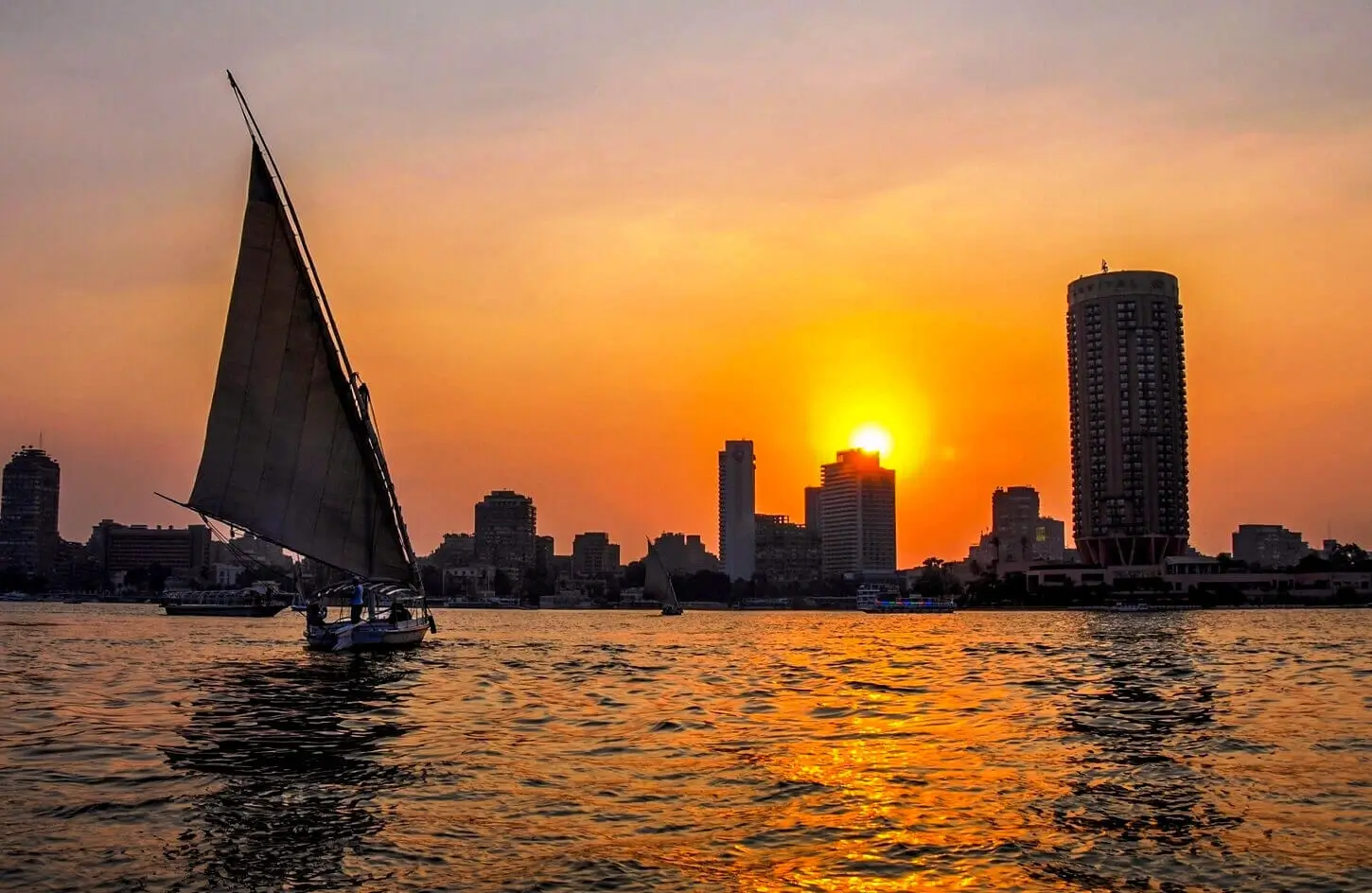
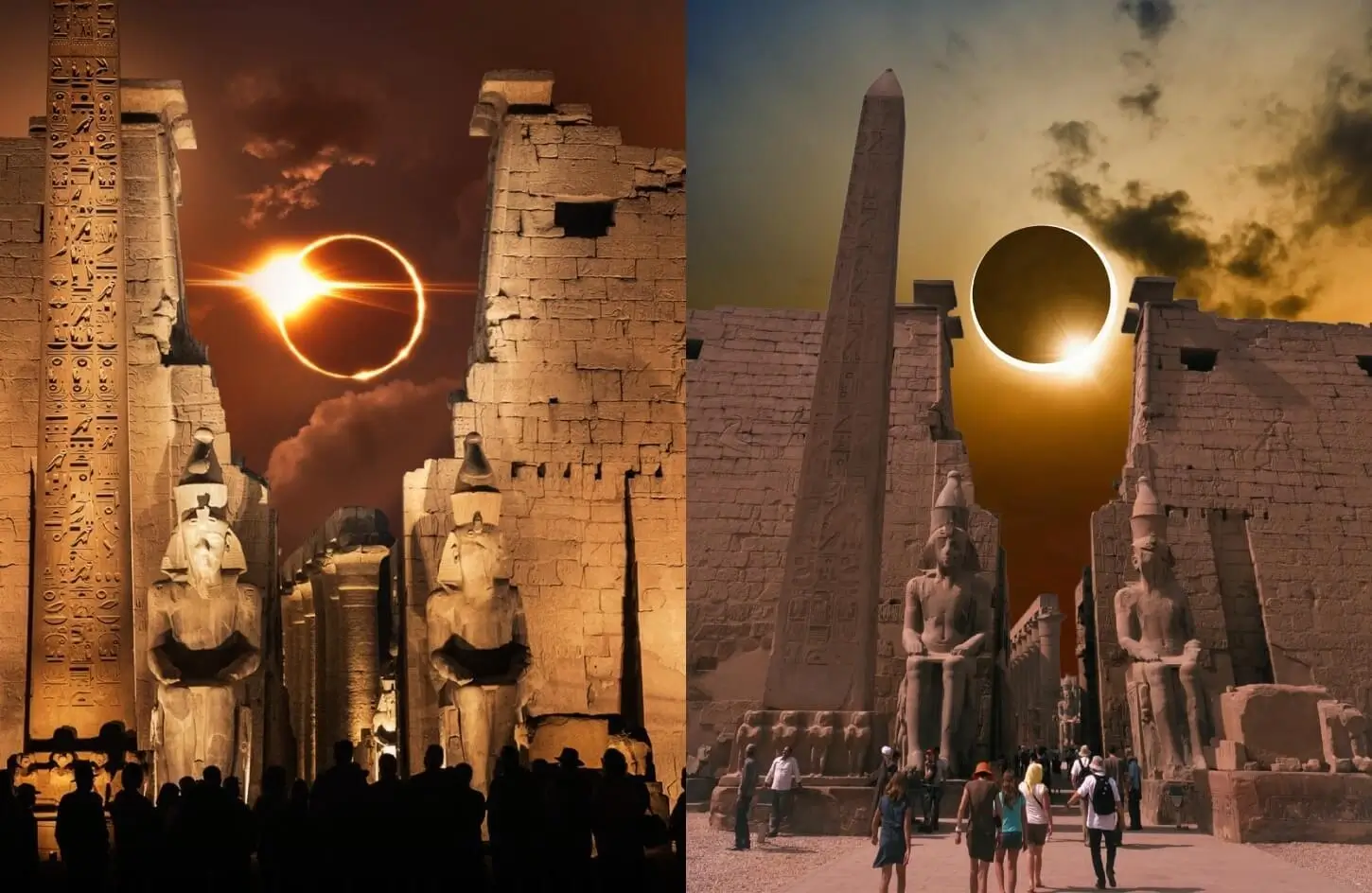
There's also the setting itself. Standing on an open deck as the sky darkens over Karnak Temple or the Colossi of Memnon — structures whose builders oriented parts of their own architecture to solar events — is a different experience than watching from a parking lot or a hotel balcony.
Best Nile Cruise Routes and Dates for Eclipse Viewing
Most standard Nile cruises run either a 3-night/4-day or 4-night/5-day itinerary between Luxor and Aswan (or the reverse), covering Edfu, Kom Ombo, and the Esna lock along the way — a roughly 230 km (143 mile) sailing route. For eclipse week, you want a departure that has your ship somewhere between Luxor and Aswan, or docked at Luxor itself, on the morning of August 2, 2027.
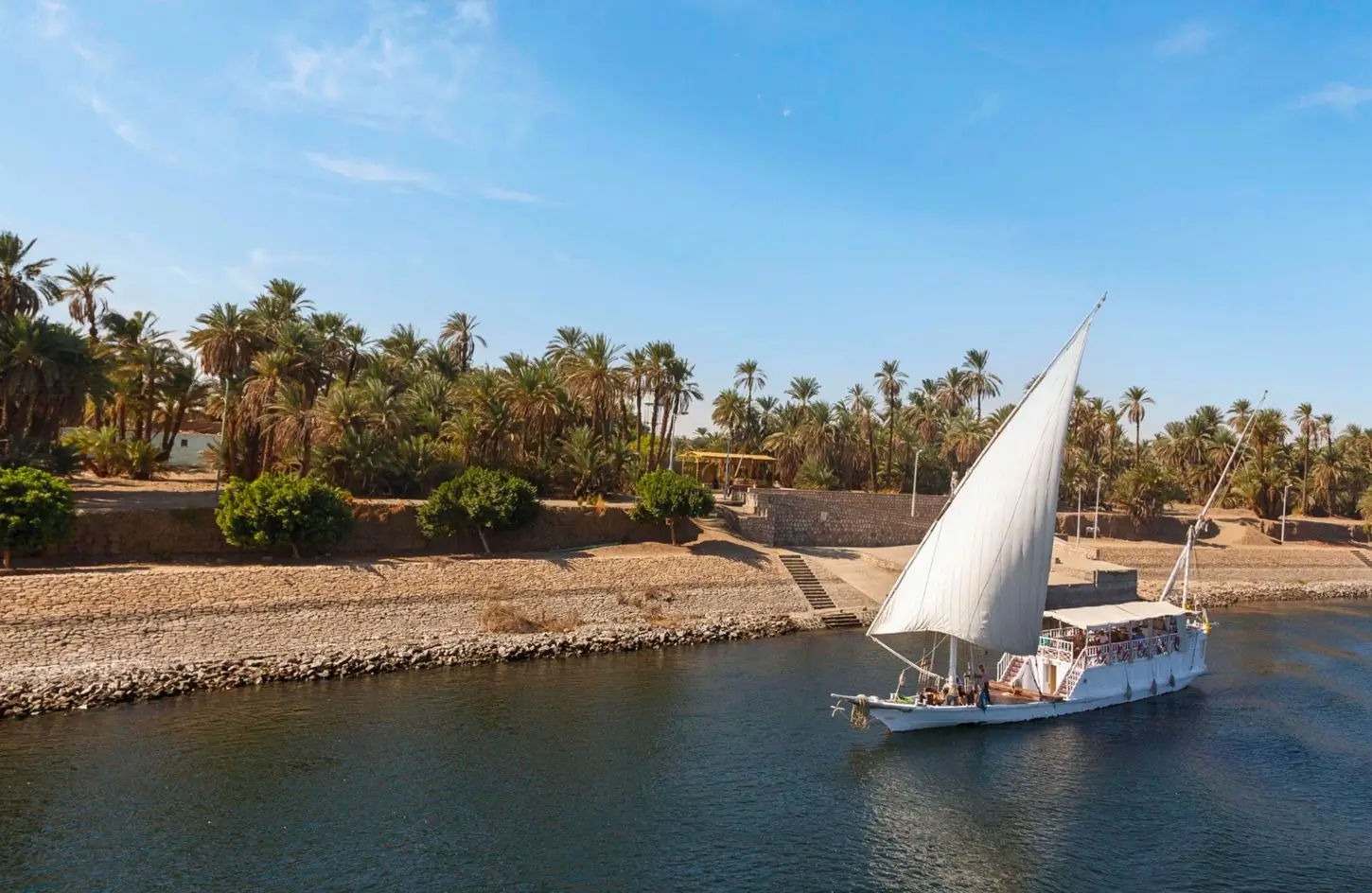
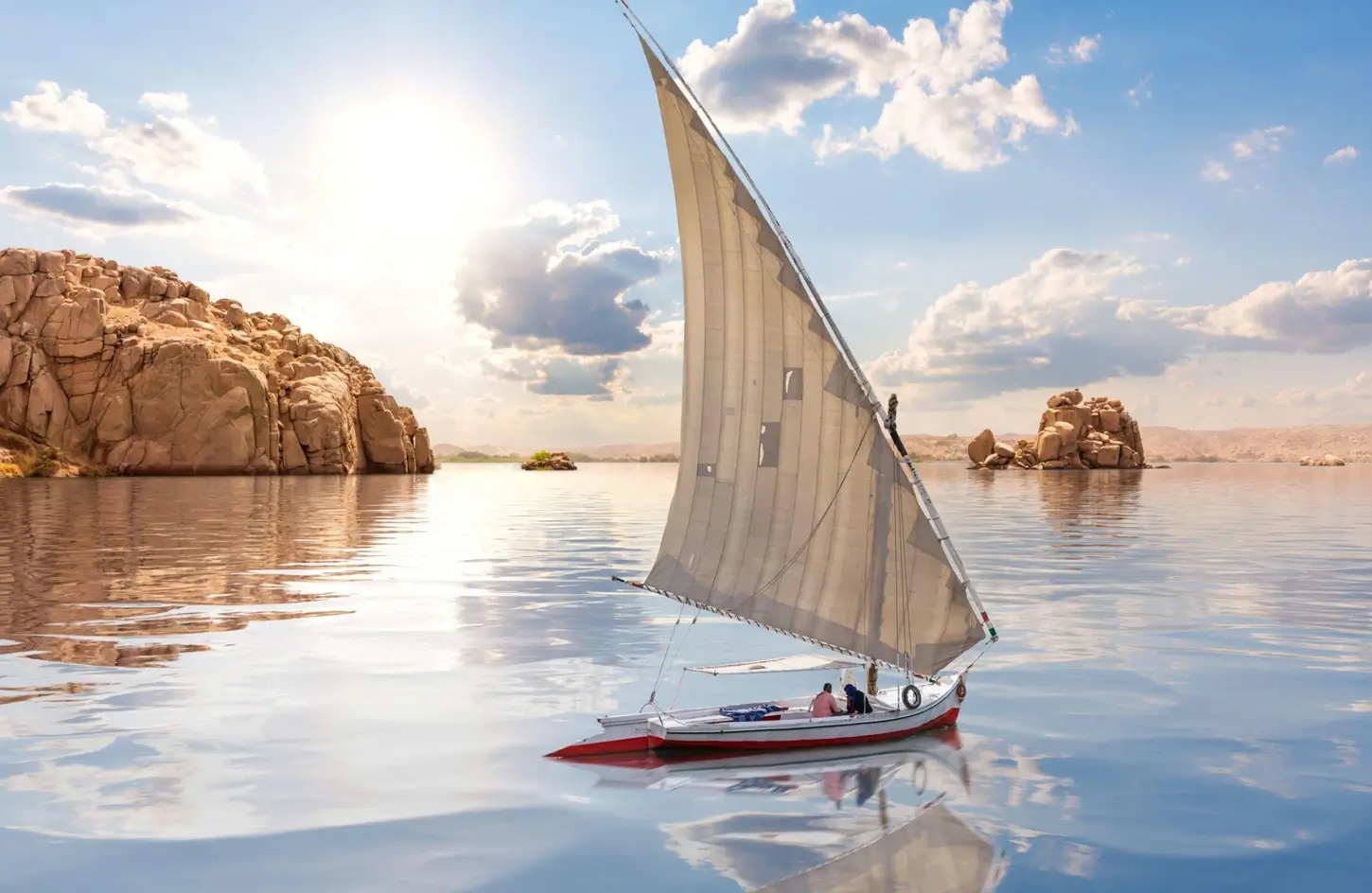
Several operators have already built eclipse-specific departures around this. Sirius Travel has run tour groups that combine Cairo, Aswan, and a multi-night Nile cruise timed to reach Luxor by eclipse day, with dedicated cabins on ships such as the Iberotel Crown Empress and smaller Dahabiya vessels. Nile Cruisers and similar operators have built 4–5 day Aswan-to-Luxor eclipse packages that place guests at Karnak Temple for the partial phases before transferring to the ship deck for totality itself. Sky & Telescope has organized a longer-format trip that combines a Luxor hotel stay aboard the ms Nile Plaza with nightly Nile dinner cruises, plus a separate 15-day cruise option aboard the historic ss Misr, sailing from Aswan through Luxor to Cairo.
Pro tip from Youssef: Standard (non-eclipse-branded) Nile cruises that simply happen to be sailing the Luxor–Aswan corridor around August 2 will very likely put you inside or close to the path of totality without charging an "eclipse premium." If your priority is value over a curated eclipse program with astronomers and lectures, ask any Nile cruise operator directly whether their scheduled August 2027 sailing dates cross Luxor around eclipse day — many will.
Luxor vs. Aswan vs. Mid-Nile: Where's Best from the Water
Luxor gives you the longest totality — around 6 minutes 20 seconds at the city itself, slightly more a short drive into the desert southeast of town — plus the most dramatic backdrop (Karnak, the Valley of the Kings, Hatshepsut's temple). It's also where demand and prices are highest.
Aswan sits closer to the edge of the favorable corridor, with totality lasting closer to 5 minutes. It's calmer, less crowded, and pairs naturally with a Philae Temple visit and an Abu Simbel day trip, but you trade roughly 60–80 seconds of totality for that quieter experience.
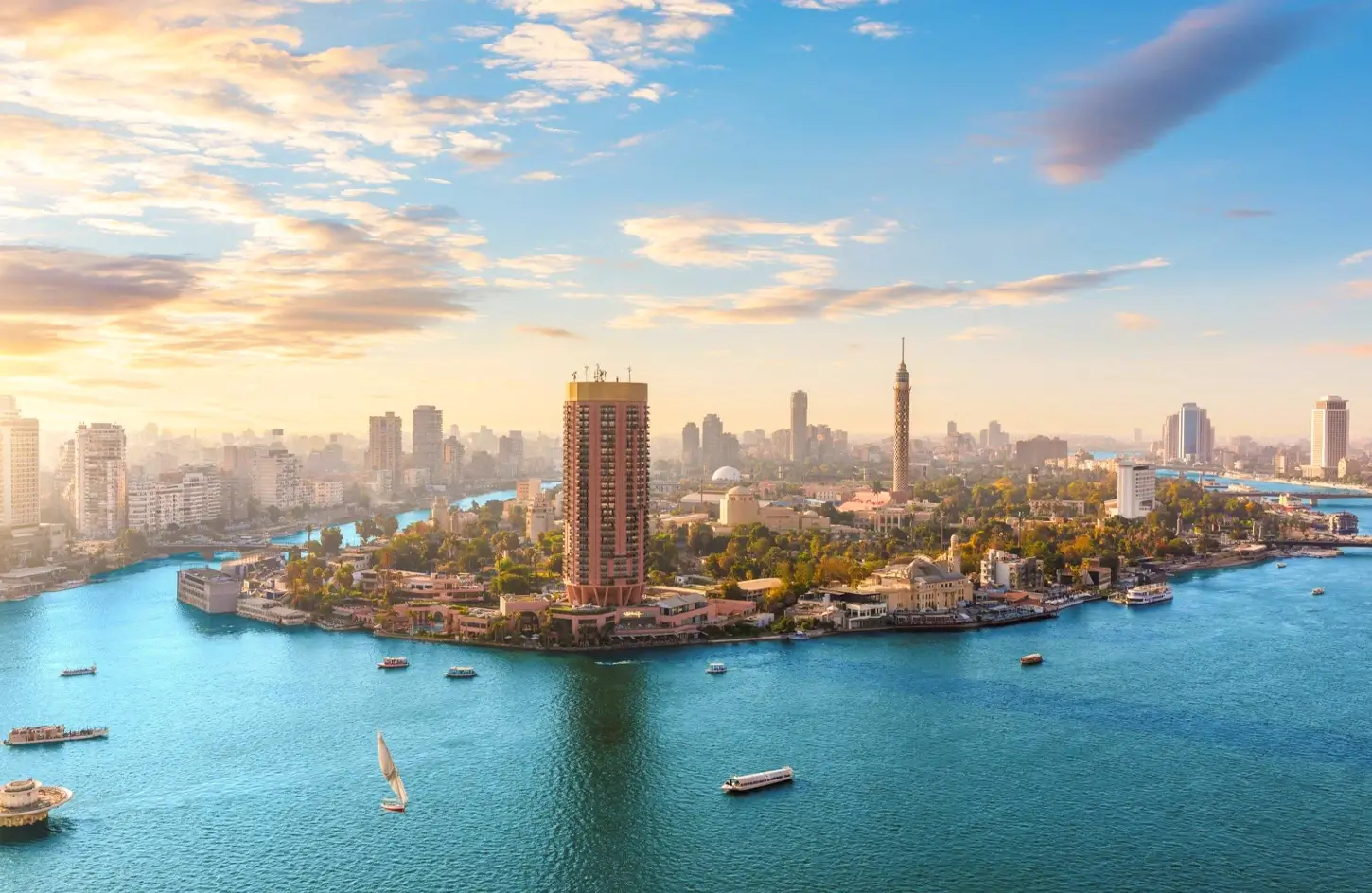
Mid-Nile, between the two — where most cruise ships are actually positioned on any given day of a standard itinerary — lands you close to the deepest part of the path with open sky in every direction and no crowd management to navigate, since you're not competing for space at a fixed monument.
If totality duration is your priority, aim for Luxor or the desert corridor just southeast of it. If you'd rather have a calmer, less commercially frenzied eclipse day, a ship positioned mid-river or near Aswan is a reasonable trade.
What a Nile Cruise Eclipse Day Actually Looks Like
Based on the itineraries operators have published so far, a typical eclipse-day schedule on a Luxor-based cruise runs something like this: breakfast on board, an early transfer to a viewing point (often Karnak Temple or the ship's open deck) with setup roughly two hours before totality, eclipse glasses on for the partial phases starting around 11:20–11:40 AM, a brief window of naked-eye viewing during the roughly six minutes of totality around 1:00–1:08 PM, then glasses back on immediately as the Sun reappears, followed by lunch on board and a return to the normal cruise schedule — sailing toward the next stop, afternoon tea on deck, dinner and overnight sailing.
Some operators are adding astronomy specialists on board to narrate the event and point out planets and bright stars that become visible during totality (Venus, Jupiter, and Mercury are commonly cited as visible to the naked eye during total darkness at midday).
Pricing: What an Eclipse-Week Nile Cruise Costs in 2027
Prices for August 2027 sailings fall into two rough categories: standard Nile cruises that happen to be sailing during eclipse week, and dedicated eclipse-branded tour packages with extras like astronomy lectures, guaranteed viewing sites, and small-group service. Below is a realistic range based on current 2026/2027 market pricing — confirm exact figures directly with any operator before booking, since eclipse-week demand is already pushing prices above normal-season rates.
| Package type | Duration | Price per person (USD) | What's typically included |
|---|---|---|---|
| Budget standard Nile cruise | 3–4 nights | $350–$700 | Cabin, full board, standard guided excursions, temple entry |
| Deluxe standard Nile cruise | 3–4 nights | $650–$1,900 | Higher-class ship, full board, guided excursions, temple entry |
| Luxury/boutique or Dahabiya cruise | 3–7 nights | $1,500–$3,275 | Small-ship or private sailing boat, premium service, full board |
| Dedicated eclipse tour package (mid-range) | 6–8 days | $7,300–$10,300+ | Cairo + Luxor/Aswan hotels, Nile cruise segment, guided eclipse-day viewing, astronomy program |
| Ultra-luxury eclipse expedition | 15–17 nights | $10,965+ | Historic vessel, full lecture and site-visit program, multi-city itinerary |
Add roughly $60–$130 per person for entrance fees not always bundled into cruise pricing — a rough day-by-day breakdown: Karnak Temple around 300–600 EGP (about $6–$12 depending on current exchange rate and which fee schedule is in effect), Valley of the Kings general admission around 450 EGP (~$9) plus separate tomb fees, and Hatshepsut's Temple around 200 EGP (~$4). Note that as of 2026, most Egyptian attractions have moved to card-only payment — carrying cash for entrance fees is no longer reliable.
Also budget for the Egypt entry visa: as of 2026 pricing, a single-entry e-visa or visa-on-arrival runs $25–$30 USD, payable online in advance at the official portal (visa2egypt.gov.eg) or in cash/card at the airport. Book the e-visa ahead of time if you want to skip the arrival-hall queue — it's the same price either way and removes one layer of eclipse-week airport congestion.
Pro tip from Youssef: The gap between a standard cruise and a dedicated "eclipse expedition" package is enormous — often $6,000 or more per person. If what you actually want is a good seat for totality and a comfortable Nile cruise around it, a standard sailing timed to eclipse week will get you there for a fraction of the cost of a branded astronomy expedition. The premium packages mostly pay for lecture programs, guaranteed private viewing sites, and small-ship exclusivity — worth it for some travelers, unnecessary for others.
Eye Safety and Eclipse Viewing Essentials
This is not optional, and it's worth repeating even if you've read it elsewhere: looking at the Sun during any partial phase of the eclipse — before or after totality — without proper protection causes permanent eye damage. ISO 12312-2 certified eclipse glasses are the only safe way to view the partial phases. The moment any sliver of the Sun's bright disk reappears after totality, glasses go back on immediately.
During totality itself — when the Moon fully covers the Sun's disk, for those roughly six minutes near Luxor — it is safe to view the corona with the naked eye. This is also the only phase where it's safe to photograph without a solar filter on your lens; during every partial phase, a proper solar filter is required on any camera or phone lens pointed at the Sun.
Buy eclipse glasses from an established astronomical retailer or scientific supplier well before you travel. Counterfeit glasses circulate heavily around major eclipse events, and supply in Egypt specifically may tighten as the date approaches — don't count on finding certified glasses locally in Luxor the week of the event. Sunscreen, a hat, and light clothing also matter: if you're out from late morning through early afternoon in Upper Egypt in August, you're in direct desert sun for hours around the eclipse itself, and temperatures regularly exceed 40°C (104°F).
What to Avoid: The Most Overrated Eclipse Spots
Not every well-marketed viewing location is actually the best choice. A few things worth knowing before you commit:
Fixed public monument sites during totality (Karnak Temple's grounds specifically) are already being discussed as designated public viewing areas, which means they'll also be the most crowded and have
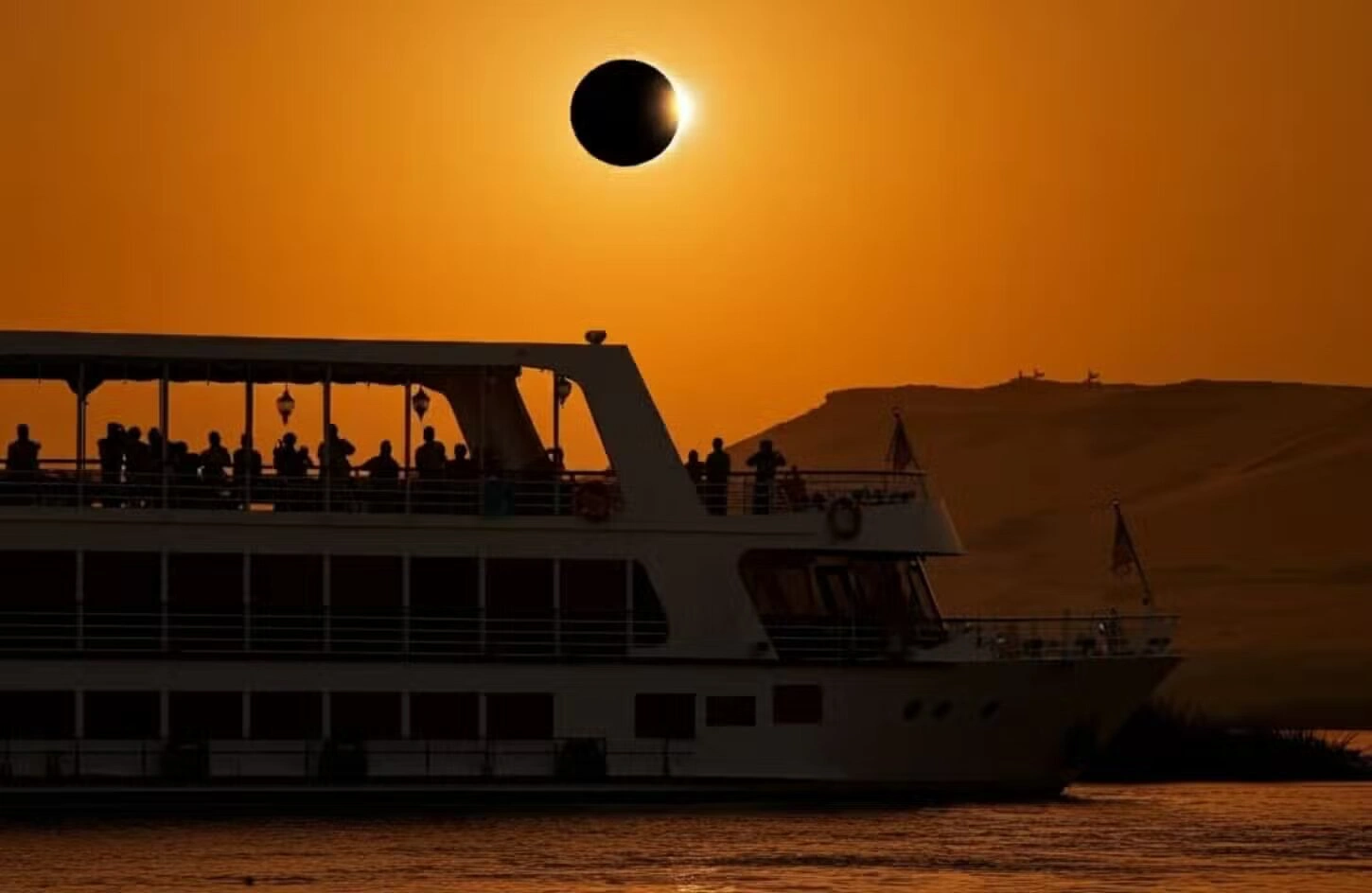
the least ability to reposition if a cloud drifts through at the wrong moment. If crowd density bothers you, a ship's open deck or a private desert vantage point gives you more control.
Day trips that skip an overnight stay are tempting for budget reasons — Hurghada-to-Luxor eclipse day trips exist and are real — but they compress an already long, hot day into a single-day round trip with a 4 AM-style early departure and a return well after dark. If your budget allows even one or two nights in Luxor or on a cruise, it's a meaningfully less exhausting way to experience the day.
Booking a generic "solar eclipse tour" without checking whether it actually reaches the deepest part of totality is a real risk. Some tours marketed around the eclipse position guests in cities like Cairo (over 95% coverage, not total) or along parts of the path with shorter totality. If maximum totality is the point of your trip, confirm your itinerary's actual viewing coordinates fall in or very near the Luxor corridor.
How to Book — And Why Timing Matters
Nile-view hotel rooms and cruise cabins for eclipse week have been filling since the 2027 date circulated in astronomy and eclipse-chasing communities in 2025–2026. Several dedicated eclipse tour groups were already reporting sold-out cabin categories well over a year before the event. If you're planning a standard cruise timed to eclipse week rather than a dedicated astronomy expedition, 12–18 months out is a realistic minimum lead time to secure a reasonable cabin category and price; for the premium expedition-style packages, some operators were taking deposits and reporting sellouts even earlier.
Beyond timing, plan a full itinerary rather than a single eclipse day. A week to ten days lets you comfortably combine Cairo (Pyramids of Giza, the Grand Egyptian Museum), the Nile cruise segment itself, and Aswan (Philae Temple, optionally Abu Simbel) without rushing the eclipse day or arriving exhausted from a same-day flight.
Beyond the Eclipse: Markets and Local Life Along the Nile
If you have any time on the ground in Luxor beyond eclipse day itself, the Luxor Souk (also called Sharia el-Souq), behind and around Luxor Temple, is worth an hour or two — narrow covered lanes selling spices, alabaster carvings, papyrus, and hand-embroidered galabiyas. Bargaining is expected and part of the experience; agree on a price before you commit, and check alabaster pieces for weight and translucency if authenticity matters to you, since lower-quality resin imitations do circulate. Continue north past the tourist bazaar section onto Sharia Ahmos for the more local, less tourist-oriented market — produce stalls, spice vendors, and everyday shops rather than souvenir stands. Aswan's souk, running along Sharia as-Souq, has a similar split between a tourist-facing main strip and a quieter local section further in.
For lodging beyond your cruise, Luxor's Nile-facing hotel range spans widely: the historic Sofitel Winter Palace (the Victorian-era hotel where Howard Carter is said to have announced the discovery of Tutankhamun's tomb) runs roughly $220–$550+ per night depending on season and room category, while mid-range Nile-view options like the Sonesta St. George or Steigenberger properties typically run $60–$90 per night in normal season — expect eclipse-week rates to run meaningfully higher given demand.
Frequently Asked Questions
How long will the total solar eclipse last in Egypt in 2027?
Totality near Luxor will last approximately 6 minutes and 20 to 23 seconds, making it the second-longest total solar eclipse of the 21st century and the longest anywhere on Earth until the year 2114. The exact duration depends on your viewing location, with the maximum point occurring in the desert, roughly 37 miles southeast of Luxor.
Is a Nile cruise actually a good way to see the 2027 eclipse, or is it just a marketing angle?
It's a genuinely practical option, not just a sales pitch. A cruise solves accommodation scarcity in Luxor, keeps you within or very near the path of totality for the entire Luxor–Aswan corridor, and gives you the flexibility to reposition slightly if cloud cover threatens your exact spot — something a fixed hotel or monument site can't offer. The tradeoff is that you're sharing deck space with other passengers rather than having a fully private vantage point.
How much does a Nile cruise cost during eclipse week in August 2027?
Standard Nile cruises timed to eclipse week likely fall in the same general range as normal high-demand pricing, roughly $350 to $1,900 per person depending on ship class, though eclipse-week premiums should be expected. Dedicated eclipse-branded expedition packages with astronomy programs and guaranteed viewing sites run considerably higher, commonly $7,000 to $11,000+ per person for a multi-day program including flights within Egypt, hotels, and cruise segments.
Do I need special glasses to watch the eclipse, and can I buy them in Egypt?
Yes, ISO 12312-2 certified eclipse glasses are required for every partial phase of the eclipse — it's only safe to look directly at the Sun with the naked eye during the brief total phase itself. Buy certified glasses from an established astronomical retailer before you travel; don't assume you'll be able to find reliably certified glasses for sale locally in Luxor as the date approaches, since counterfeit glasses circulate heavily around major eclipse events and genuine stock can sell out.
When should I book a Nile cruise for the 2027 solar eclipse?
As early as possible — realistically 12 to 18 months ahead of August 2027 for a standard cruise with a reasonable cabin selection, and even earlier for dedicated eclipse expedition packages, several of which have already reported sold-out cabin categories well over a year in advance. Nile-view hotel rooms and cruise cabins along the Luxor–Aswan corridor have been filling steadily since the 2027 eclipse date became widely known in the astronomy travel community.
Is Luxor or Aswan the better place to watch the eclipse from a cruise?
Luxor offers the longer totality, around 6 minutes 20 seconds versus roughly 5 minutes in Aswan, along with the more dramatic temple backdrop. Aswan is quieter and less commercially crowded, and pairs well with a Philae Temple or Abu Simbel add-on. If maximizing totality duration is your priority, position toward Luxor or the desert corridor just southeast of it; if you'd rather avoid the busiest viewing areas, a ship positioned mid-river or near Aswan is a reasonable tradeoff.
A final note from Youssef Adel
I'll be straightforward about where this guide's numbers come from: I've pulled them from current 2026 pricing across multiple Nile cruise operators, published eclipse-tour itineraries, and official entrance-fee and visa sources, rather than from a specific trip of my own — 2027 hasn't happened yet, and anyone claiming detailed firsthand experience of this exact eclipse is getting ahead of the calendar. What I can tell you with confidence, from closely tracking Nile cruise logistics, is that the gap between a standard cruise and a dedicated eclipse expedition package is real and often not worth the premium unless you specifically want the lecture program and a guaranteed private site. If you're weighing cruise options for eclipse week, get in touch with our team at Egypt Cruise Trips — we can walk through specific August 2027 sailing dates against your budget and priorities before availability tightens further.